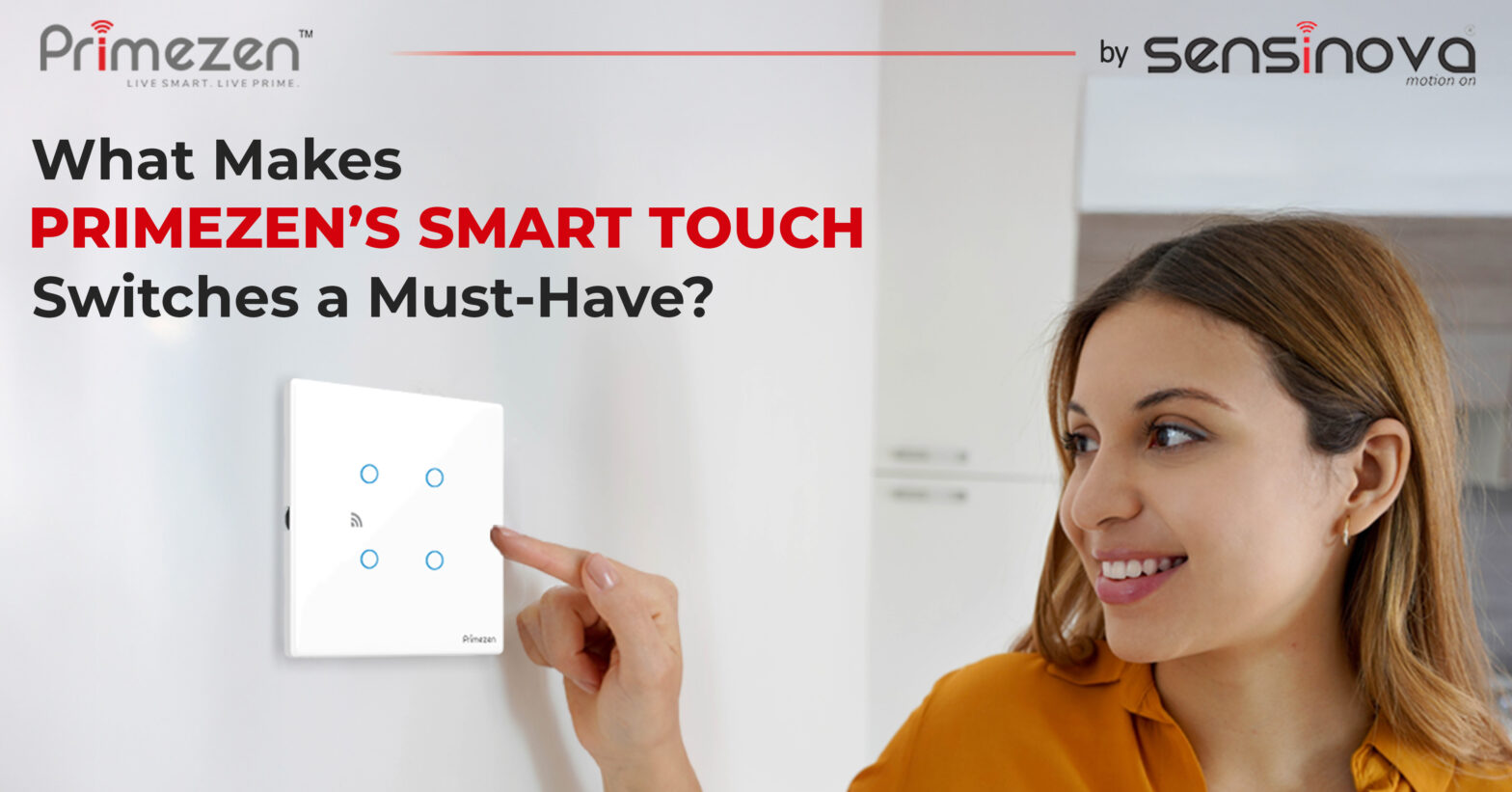
Indian homeowners are increasingly embracing smart switches for home automation as a key upgrade for convenience and style. Primezen’s smart touch switches exemplify this trend, combining elegant design with modern app and voice control to transform ordinary houses into smart homes. Smart Switches for Home Automation A smart home automation touch switch looks similar to a sleek glass panel on your wall, but it does much more than a traditional switch. Traditional electrical switches simply turn power on or off to a fixture and require you to be physically present to operate them. In contrast, smart switches for home automation offer a touch-based interface and connectivity that enables control from anywhere. It uses a touch-sensitive panel instead of a mechanical toggle, so a simple tap can turn a device on or off. Because it’s “smart,” it also connects to a network, allowing remote control via an app or voice assistant. Visually, Primezen’s switches have a sleek glass design with LED indicators, adding a modern touch that old plastic switches can’t match. Benefits of Primezen’s Smart Switches for Home Automation Primezen’s smart switches for home automation are more than just fancy gadgets – they’re a comprehensive upgrade to your lifestyle. The benefits of using Primezen’s smart touch switches in your home automation setup include: Unmatched Convenience: With Primezen, you can control your lights, fans, and other appliances from anywhere. Whether on the couch or away on holiday, just use the Primezen app or Alexa voice commands. Forgot to turn off a light? No problem – a quick tap on your phone and it’s off. This level of convenience gives you peace of mind and saves time. Modern Aesthetics: Primezen’s smart touch switches bring a touch of luxury to your walls with their sleek, minimalist glass panels and subtle LED backlighting. Installing these switches instantly elevates a room’s décor, giving it a clean, modern look that impresses visitors and makes everyday life feel high-tech. Integration with Smart Home Systems: Primezen switches integrate seamlessly with the rest of your smart home. They work with Alexa for voice control and connect with other popular smart home platforms, so your lights, security sensors, thermostats, and entertainment systems all work in sync. You can even set one command or schedule to trigger multiple devices simultaneously, creating a truly connected home experience. Primezen’s Home Automation Solutions Ecosystem Smart Light Controllers: These are for dimming and mood lighting control. Gate Automation: For automated gates and garage doors. Curtain Controllers: These are for motorized curtains and blinds with scheduling. Centralized Wiring: Multi-circuit controllers manage several appliances from one panel. Home Automation Gateway: The central hub that connects and coordinates all devices. Universal Remote Control: An IR blaster hub to control TVs, ACs, and other IR appliances via app or voice. Built for Scalability and Pan-India Deployment Primezen’s smart home system is highly scalable – it works as well for a single apartment as it does for a multi-story complex with hundreds of devices. This makes Primezen’s smart switches for home automation an ideal choice not only for individual homes but also for big projects like apartment complexes, hotels, or office buildings. Importantly, Primezen’s products are built for India. They meet Indian electrical standards and can handle typical local power loads. Primezen has a pan-India support network, so whether your project is in a metro city or a smaller town, you can count on reliable supply and service. In short, these smart touch switches and automation solutions are genuinely ready for deployment across the country at any scale. Whether you’re a homeowner ready to embrace a smarter lifestyle or a distributor seeking high-demand home automation solutions, Primezen has you covered. Don’t miss out on the smart home revolution – contact Primezen today to explore our products or to discuss bulk orders for your next project. SN-Pearl Universal Remote Control ZEN-CURT Curtain Controller ZEN-2C10W DRC Channel Controller ZEN-1C10W Gateway Automation FAQ’s How do you use a touch switch? Just tap the touch-sensitive surface to turn the connected light or appliance on or off – it’s that simple. Many models also support app or voice control for added convenience. How does a smart touch switch work? A smart touch switch uses a touch sensor and wireless control instead of a mechanical toggle. When tapped, it sends a signal that turns the connected light or appliance on or off. Are Primezen switches compatible with Alexa? Yes – Primezen’s smart touch switches work with Alexa. After linking them with the Primezen app, you can ask Alexa to turn lights or appliances on or off with simple voice commands. What makes Primezen ideal for large installations? Primezen’s smart switch system is highly scalable. One gateway can connect dozens of switches across a whole building. Even with many devices, the system stays responsive, making Primezen ideal for big projects.
Author: admin
How to Get Started with Smart Home Automation in India
Smart homes are no longer a futuristic concept! They are a present reality, even in India. Whether you’re a homeowner curious about upgrading your lifestyle or a dealer seeking modern home automation solutions, understanding how to begin is key. This guide will explain home automation, how it works, and how Primezen’s system makes it easy to start small and scale up. We’ll keep things simple yet informative, addressing common questions from homeowners and offering technical insights valued by channel partners. Let’s dive into how to get started with a smart Home Automation System India can benefit from. Home Automation System India: Basics and Benefits A home automation solution is a system that allows you to control and manage various electronic devices in your home through a centralized platform, such as a smartphone app or voice assistant. These smart systems connect devices like lights, fans, curtains, air conditioners, and security sensors to the Internet, enabling you to operate them remotely or automatically based on schedules or triggers. Whether it’s turning on the lights before you arrive or closing the curtains at night, a home automation solution adds comfort, convenience, and personalized control to your everyday life. Home Automation System India: Basics and Benefits What is home automation? It means using technology to automatically or remotely control devices and systems in your home. Lights, fans, air conditioners, TVs, gates, and even curtains can be connected to a Home Automation System India homeowners trust for convenience and efficiency. Instead of manually operating each switch or device, you use smart controls – via a mobile app, voice command, or a central hub – to manage everything effortlessly. How does it work? A typical setup includes smart controllers, communication technology Wi-Fi or RF wireless signals, and a central gateway or app that ties it all together. For example, a light controller module can be installed to make your existing lights smart, and a home automation gateway connects that module to your Wi-Fi. You can then turn lights on/off or dim them through your phone or by talking to Alexa. Primezen’s system uses a hybrid of Wi-Fi and RF (radio frequency) technology – RF allows home automation switches and devices to talk to each other reliably over long range. At the same time, Wi-Fi enables internet connectivity for smartphones and voice control. This dual approach ensures that your smart home automation touch switch on the wall can instantly toggle a light via RF, and you can also control the same light from anywhere through the app. Benefits: Home automation adds comfort, safety, and efficiency to daily life. Imagine your lights and fans turning off automatically when not needed, or your curtains opening each morning on schedule. With a home automation system, India’s busy homeowners can save energy and time. No more worrying if you left the geyser on after leaving the house! For dealers and integrators, offering these systems means providing a cutting-edge solution that appeals to modern consumers. It’s a win-win: homeowners enjoy convenience and luxury, while channel partners get to deliver a high-tech service that’s in growing demand. Home Automation System India Guide: Getting Started with Primezen Ready to make your home smart? Getting started is simpler than it might seem. Here’s a quick step-by-step guide to implementing Primezen’s Home Automation System India that beginners can follow: Plan Your Smart Upgrade: Identify the top priorities in your home. Do you want to automate lighting, secure the entrance gate, or control appliances? Many people begin with a couple of lights or a fan – essential things that make an immediate difference. It’s often wise to start small, learn the basics, and then expand your home automation system as you gain confidence. Choose the Right Primezen Devices: Primezen offers a range of products to match your needs. For lighting, a Primezen Light Controller can be added to your switchboard or distribution box, instantly making those lights app- and voice-controllable. If you have motorized curtains or blinds, a Curtain Controller like the Primezen ZEN-CURT module will let you open or close them with a tap or voice command. For those with electric gates or garage doors, consider Primezen’s Gate Automation solution (a heavy-load motor controller) to automate opening and locking. And don’t forget convenience add-ons: a Universal Remote Control hub can replicate all your IR remote controls (TV, AC, set-top box) so you can manage entertainment and climate devices through the same system. By selecting the devices that fit your lifestyle, you create a personalized smart home setup. Set Up the Home Automation Gateway: The Home Automation Gateway is the heart of Primezen’s system. Think of it as the smart home router connecting all your devices. Primezen’s gateway is low-power, easy to install, and can pair with up to 50 devices. Simply connect the gateway to your Wi-Fi network and follow the instructions to pair your Primezen switches and controllers. This hub ensures that all your home automation switches and modules communicate smoothly and that you can control them via the Primezen mobile app or voice assistants. Install and Pair Your Devices: Primezen devices are built for fast, hassle-free installation. The light and curtain controllers fit standard switch boxes with minimal rewiring. Their wireless smart home automation touch switches use battery-free kinetic tech—no wiring is needed; just stick and use. Homeowners can get it installed quickly by any electrician. For dealers, Primezen offers easy integration with clear wiring diagrams. Setup takes minutes, and pairing with the app is simple—just press a button and connect. Whether it’s a minor upgrade or complete home automation, Primezen makes the process smooth for users and installers. Connect with App and Voice Control: Start by downloading the Primezen app on Android or iOS to connect your gateway and add devices. You can name each one (like “Main Gate” or “Bedroom Lights”) and control them easily. The app allows you to set schedules (like switching on lights at 7 PM) and create custom scenes (such as “All Off” at night). You can… Continue reading How to Get Started with Smart Home Automation in India
Smart Switches vs. Traditional Switches: Why It’s Time to Upgrade
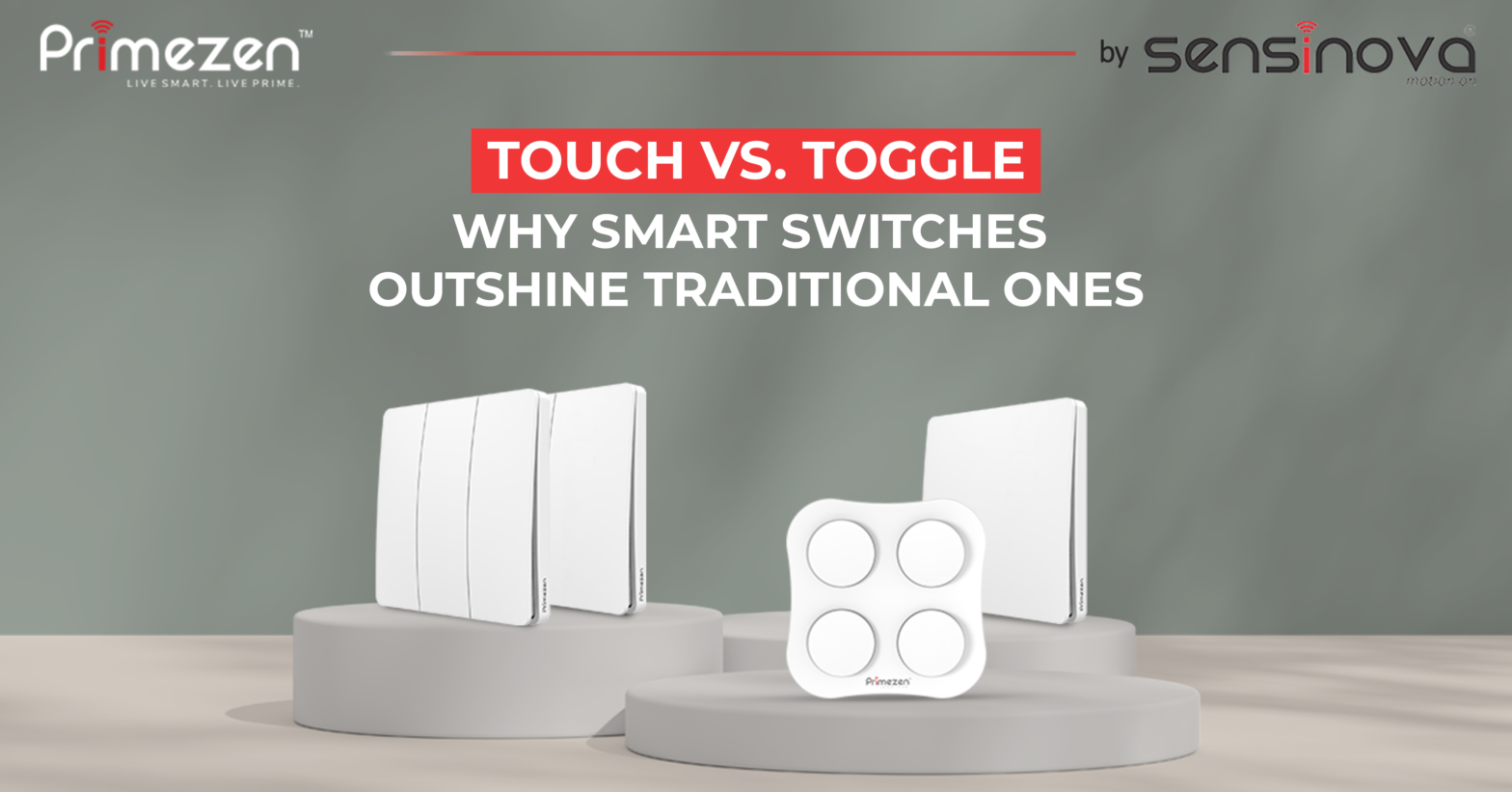
Flipping the same old switches daily can feel mundane, especially when our world is getting smarter. Enter smart switches for home automation, the modern upgrade that promises comfort, luxury, and convenience at your fingertips. Traditional switches simply turn things on or off; touch switches for home, on the other hand, let you control your lights and appliances with a tap, a voice command, or even a smartphone from miles away. For Indian homeowners who crave a blend of style and ease, upgrading to these intelligent touch panels is a game-changer in home automation. Smart switches not only look sleek but also bring a host of smart features into your home. You get a flat, glassy interface with a touch panel switch board that feels high-tech and elegant compared to clunky old switch plates. More importantly, these smart devices offer capabilities far beyond what a traditional switch can do, making everyday life easier and more luxurious. Smart Switches for Home Automation vs Traditional Switches Let’s compare how modern smart switches stack up against old-fashioned ones and why it’s time to make the switch: Convenience & Remote Access: Smart switches let you control appliances from anywhere using a mobile app or with voice commands via Alexa (or Google Assistant). You can also operate them with a simple touch on the wall panel. Traditional switches, by contrast, require you to be physically present each time you want to flip something on or off – not very convenient in a large home or when you’re away. Automation & Energy Savings: Smart switches for home automation can be scheduled or synced with sensors to work automatically. For example, you can set lights to turn off on their own at bedtime or have the porch light come on at sunset. This not only saves you effort but also reduces energy waste (no more accidentally leaving lights on all night). Traditional switches offer no such smart features – they rely entirely on you remembering to toggle them. Modern Aesthetics & Luxury: Smart touch switches have a sleek, flat design (often with a tempered glass front) that adds a premium look to your home. They may have subtle LED indicators or customizable icons, making it easy to find and use even in the dark, while giving a futuristic vibe. These touch switches for the home are also durable with no mechanical parts to wear out, and many are built with safety in mind (such as fire-resistant materials and shock protection). In contrast, old toggle switches are purely functional eyesores that can feel out of place in a modern, luxury interior. Integration & Smart Features: Smart switches integrate with your broader home automation system. They can work alongside smart bulbs, security systems, or PIR motion sensors for a fully automated experience. You can create “scenes” (for instance, a Movie Time scene could dim the lights and turn on the AC with one command) or use voice prompts to control multiple devices simultaneously. Traditional switches cannot connect or coordinate with other devices – each works in isolation, offering no interconnectivity. By now, it’s clear that sticking with traditional switches means missing out on a whole world of convenience and control. Smart switches offer not just new ways to control your lights and appliances, but a new lifestyle upgrade that combines technology with everyday living. Primezen’s S1, S2, S3 Series Smart Home Switches When it comes to choosing smart switch solutions, Primezen – a leader in Indian home automation – has you covered with its innovative Zen Touch series. Primezen offers a range of smart touch switch boards designed for different needs and preferences. Here’s a quick look at what each series brings: S1 Series: A perfect blend of elegance and everyday function. S1 smart switches let you effortlessly control lights, fans, and more, with support for features like dimming. These switches seamlessly connect with your home automation setup, giving you convenient control at your fingertips in a stylish form factor that complements any room. S2 Series: Built for durability and innovation. S2 switches feature wireless kinetic technology and a water-resistant design, meaning the switch can work without external power or batteries and can withstand humid areas like bathrooms or kitchens. This series delivers reliable control (even in challenging environments) and energy savings, making it ideal for spaces where you need toughness without sacrificing modern features. S3 Series: The premium, tech-savvy choice. S3 smart touch switches offer high customizability (such as adjustable icons or panel colours) and integrate easily with other smart devices in your home. They sport a sleek design to match any décor. From dimming lights to controlling multiple appliances and setting up advanced scenes, the S3 series is an all-in-one solution for those who want the ultimate smart home experience. Upgrade to a Smarter Lifestyle Swapping out a traditional switch for a smart one is a small change that yields big benefits. With features like voice control (just say “Alexa, turn off the lights”), remote access via an app, and elegant touch interaction on the wall, smart switches truly transform your daily life. Indian homeowners who desire comfort and luxury will find that these upgrades not only make life easier but also add a premium feel to the home (and even impress your guests!). Primezen’s range of smart touch switch boards – from the S1 to S3 series – offers an ideal option for every need. So why stay stuck with the old ways when an upgrade is within reach? It’s time to step into the future of living. Upgrade your home with smart switches for home automation and experience the Primezen difference today. FAQ’s Which company is best for smart touch switches? Primezen is one of the top choices for smart touch switches in India. Their Zen Touch series offers stylish designs, Alexa compatibility, and reliable performance—perfect for modern homes. How do I choose a smart touch switch? Look for compatibility with your wiring, features like dimming or fan control, and support for Alexa or Google.… Continue reading Smart Switches vs. Traditional Switches: Why It’s Time to Upgrade
Top 7 Benefits of Home Automation That Simplify Everyday Life

Modern homeowners in India are embracing home automation solutions to enhance comfort and luxury. In fact, the Indian smart home market is booming, expected to reach USD 5.20 billion in 2025 and grow ~30% annually, as people seek the best home automation system in India for convenience and peace of mind. With Primezen’s full suite of smart devices, your home can truly “Live Smart, Live Prime.” Let’s explore the top 7 benefits of home automation that simplify everyday life and see how Primezen’s offerings make it possible. Home Automation Solutions Comfort: A Home That Adapts to You One of the biggest perks of automation is sheer comfort. Your home can automatically adjust lighting, temperature, and ambiance to keep you comfortable. Imagine the lights slowly brightening and the AC cooling the room before you even leave bed – home automation makes this a reality.Primezen’s curtain controllers, for example, can open your drapes every morning to let in natural light or close them in the afternoon to keep the house cool. By tailoring the environment to your preferences, a smart home ensures you always step into a comfortable setting without lifting a finger, turning your living space into a personal oasis of ease. Convenience: Effortless Living Automation brings unparalleled convenience to everyday tasks. With a smart home, mundane chores become automated or controllable by simple commands. You no longer need to get up to flip switches or adjust dials – just use your voice or smartphone.Primezen’s systems integrate with Alexa for hands-free control, so you can say, “Alexa, turn off the lights,” and relax as it’s done instantly. You can also control appliances via a mobile app, whether on the couch or in the backyard. This level of convenience alleviates stress and saves time, letting you enjoy a more relaxed and fulfilling lifestyle. Smart automation streamlines daily routines so you can focus on what matters most. Personalization: Tailored to Your Lifestyle Every homeowner has unique preferences, and personalization is where home automation solutions truly shines. Smart systems let you create custom scenes and routines: for movie night, you might dim the lights and draw the curtains at once, or have a “Welcome Home” scene that turns on lights and your favourite music as you enter.Primezen’s touch panel switches and mobile app make setting up these personalized scenarios easy. You have the power to program exactly how and when devices respond – home automation isn’t just about convenience, but about expressing your lifestyle. Your home becomes an extension of your personality and needs, adapting on cue to match any mood or occasion. Remote Access: Control from Anywhere One of the most liberating benefits of a smart home is the ability to monitor and control your space from anywhere in the world. Remote access means you can check and adjust your home’s settings via an app or voice assistant even when you’re not physically there.Forgot to turn off the geyser or lock the door? Simply open the app or ask Alexa to take care of it – problem solved. This capability offers tremendous peace of mind: you can confirm that everything is secure and even get real-time alerts from security sensors. Primezen’s gateway connects all your devices to the cloud, enabling this seamless remote connectivity. Whether at work or on vacation, your smart home is only a tap away. Ease of Scheduling: Automated Routines Home automation allows you to put everyday tasks on autopilot through scheduling. With Primezen’s system, you can easily schedule devices to operate at certain times – no manual effort needed.For instance, set your water heater or coffee machine to switch on before you wake up, or have your lights and smart switches turn off at midnight routinely. Smart schedule control saves you the hassle of remembering each task and ensures your home is perfectly in sync with your daily rhythm, making life smoother and more convenient daily. Enhanced Control: Master Your Entire Home A smart home gives you enhanced control over every aspect of your household devices. All your lights, fans, appliances, and even locks or cameras can be interconnected and managed centrally.Primezen’s S1, S2, S3 smart switches for home automation exemplify this benefit – these sleek wireless switches replace traditional ones, allowing you to control lighting or heavy appliances effortlessly via touch or app. These home automation switches not only work manually on the wall but also let you adjust settings with voice commands or remote app control.You can fine-tune the brightness of lights or speed of fans, activate the sprinkler system, or change thermostat settings all in one place. Primezen’s modern smart switches (S-Series) combine elegant design with intelligent wireless control, putting advanced home automation at your fingertips. Elevated Lifestyle Experience Finally, integrating all these benefits leads to an elevated lifestyle beyond the ordinary. A fully automated home offers a touch of luxury and futuristic charm that truly enhances your living experience.Imagine hosting guests and impressing them when you set the perfect ambiance with one voice command, or enjoying movie night as your home theatre, lights, and curtains all sync to create a private cinema feel. Explore Our Range of Home Automation Products Smart automation also contributes to peace of mind – Primezen’s security kit, for example, makes your “safe haven smarter” with door sensors, motion detectors, and alarms that you can monitor 24/7. Knowing that your home is intelligent and secure allows you to relax and enjoy life fully. Primezen’s full suite of home automation products – including smart switches (S1, S2, S3 series), elegant touch panel switches, automated curtain controllers, robust gateways, and smart security kits – brings all seven benefits into your home. Each device works together as part of an integrated home automation solutions to transform your house into a smart home oasis.
Touch Panel Switch: Smart Living at Your Fingertips

In the era of smart homes, the traditional light switch is getting a modern makeover. Enter the touch panel switch – a sleek, touch-sensitive control panel that replaces bulky flip switches in contemporary homes. You can turn lights or appliances on and off with a gentle tap, set moods, and even activate entire smart home scenes. This intuitive technology matters for today’s smart living because it combines convenience with style, making everyday interactions with your home easier and more enjoyable. What is a Home Automation Solution? A home automation solution is a system that allows you to control and manage various electronic devices in your home through a centralized platform, such as a smartphone app or voice assistant. These smart systems connect devices like lights, fans, curtains, air conditioners, and security sensors to the Internet, enabling you to operate them remotely or automatically based on schedules or triggers. Whether it’s turning on the lights before you arrive or closing the curtains at night, a home automation solution adds comfort, convenience, and personalized control to your everyday life. Touch Panel Switch: Convenience at Your Fingertips One of the most significant advantages of a touch panel switch is its ease of use. Unlike old-fashioned switches that require a firm press or flick, touch panels respond to the lightest touch. A simple tap is all it takes to control your lighting or gadgets. This means no more fumbling for the right switch in the dark or struggling with stiff buttons – the panel is responsive and user-friendly for everyone. The gentle touch interface is accessible for all ages, from children to the elderly. It even helps those with limited mobility, since minimal effort is needed to activate any connected device. Touch panel switches also often support remote control and voice commands, adding convenience. Many smart touch panels integrate with mobile apps or smart home hubs to adjust your lights or fans right from your smartphone or with a quick voice command. Forgot to turn off the bedroom lights? With a touch panel system, you can do it from your phone without getting up. This level of convenience at your fingertips transforms how you interact with your home daily. Streamlining Everyday Life with Smart Living Touch panel switches are more than just fancy light controls – they are integral to a smart living ecosystem. These panels can connect to a central home automation system, letting you streamline multiple tasks at once. With a one-touch panel switchboard, you can control overhead lights, adjust the AC, and lower motorized blinds, all from the same sleek interface. The result is a more streamlined daily routine. For example, with a single preset on a touch panel, you can instantly set the perfect evening scene: dimming the lights, closing the curtains, and turning on calming music simultaneously. Because they integrate seamlessly with other smart devices, touch panels make home management effortless. You can schedule appliances and lights to operate automatically through the panel’s smart scheduling features, or create one-touch “scenes” for your routines. Whether you’re waking up in the morning or hosting a dinner, your home’s ambiance adjusts with minimal manual effort. This kind of automation saves time and enhances your comfort – your home practically anticipates your needs. In short, touch panel switches simplify everyday life by tying various aspects of your home into one easy-to-control system. Why Touch Panel Switch Boards Are the New Norm Modern homeowners are increasingly swapping out traditional switchboards for touch panel switchboards, and it’s easy to see why this trend is becoming the new norm. First, these switches offer unmatched convenience and style that old toggle switches simply cannot rival. Their sleek and modern design adds a high-tech elegance to any room, often with glass or glossy finishes that blend into contemporary interiors. Decorators and tech-savvy homeowners love how a touch panel switchboard can elevate the look of a space, giving walls a clean, uncluttered appearance. Finally, touch panels are aligned with the future of smart homes. As technology becomes an integral part of home design, having a touch-sensitive smart switchboard is a forward-thinking choice. New home constructions and modern renovations now commonly include touch panel switches as standard, preparing homes for further smart integrations. They are seen as a future-proof investment, ensuring that your home’s infrastructure keeps up with advancing tech. Why stick with decades-old switch designs when you can embrace the same kind of intuitive control you enjoy on smartphones and tablets? For many, upgrading to touch panel switch boards is like moving from a rotary phone to a smartphone – it’s a natural evolution in the quest for comfort and modernity. Explore Primezen’s Zen Touch Panels Ready to upgrade your living space with the convenience of touch control? It’s time to explore Primezen’s Zen Touch Panels. Primezen offers touch panel switches that perfectly blend innovation with style, available in elegant black or white finishes to suit any decor. Each panel is designed to be highly responsive and straightforward to use, making your daily interactions with home lighting and appliances a delight. By switching to a Zen Touch Panel, you’ll modernize your home and experience smart living on a whole new level. Visit Primezen’s website to discover how Zen Touch Panels can transform your home, and take the first step towards a smarter, more convenient lifestyle today.
A Seamless Day with Primezen’s Home Automation Solutions
Home automation solutions have revolutionized modern living by simplifying everyday tasks and adding a layer of intelligence to our homes. With just a touch, tap, or voice command, managing your space becomes effortless. In this blog, we delve into how Primezen’s cutting-edge home automation systems empower you to personalize your home experience with seamless control, smart scheduling, and interactive features—all designed to make life easier, more connected, and uniquely yours. What is a Home Automation Solutions? A home automation solution is a system that allows you to control and manage various electronic devices in your home through a centralized platform, such as a smartphone app or voice assistant. These smart systems connect devices like lights, fans, curtains, air conditioners, and security sensors to the Internet, enabling you to operate them remotely or automatically based on schedules or triggers. Whether it’s turning on the lights before you arrive or closing the curtains at night, a home automation solution adds comfort, convenience, and personalized control to your everyday life. Smart Schedule Control One of the standout features of the Primezen system is its ability to automate your daily routines seamlessly. With smart schedule control, you can pre-set actions like opening curtains, turning on geysers, or adjusting the air conditioning according to different times of the day. This not only adds comfort but also enhances the efficiency of your home. Home Automation Solutions for Multiple Scene Creation Primezen allows you to create multiple scenes for different activities—whether it’s for relaxation, working out, or reading. Each scene can customize aspects of your home such as lighting, temperature, and more, tailoring your environment to suit your current activity without the need for manual adjustments. A Day in Sync with Primezen Experience a day fully synchronized with your personal and home needs. When you wake up, your home can automatically adjust to your preferences. Morning routines are simplified with automatic adjustments of light and temperature, ensuring a perfect start to your day. Interaction Methods: Touch, Talk, Tap Primezen systems are designed for ease of use through various methods of interaction. Whether it’s through touch panels that blend into your home’s aesthetics, voice commands that allow for hands-free control, or a mobile app that gives you control from anywhere, you have complete flexibility in how you interact with your system. Key Benefits Customization: Tailor your home environment to your preferences and needs, creating perfect settings for different times and activities. Convenience: Adjust your home’s settings remotely or set schedules and scenes that automate tasks, saving time and effort. Control: With various interaction methods, you have complete control over your home’s automation features easily and intuitively. Home automation by Primezen not only enhances the comfort and convenience of your home but also adapts to your lifestyle, providing an innovative, efficient, and customizable living experience. By integrating advanced technologies into daily routines, Primezen ensures that your home is synchronized with your life, making every day smoother and more enjoyable. As home automation technology continues to evolve, systems like Primezen are at the forefront, offering solutions that enhance the functionality and comfort of your living spaces. Whether new to home automation or looking to upgrade your system, Primezen offers the tools and technology to transform your home into a connected and harmonious environment. Explore more about how Primezen can transform your home!
Why Smart Security Kits Are Essential for Modern Home Protection
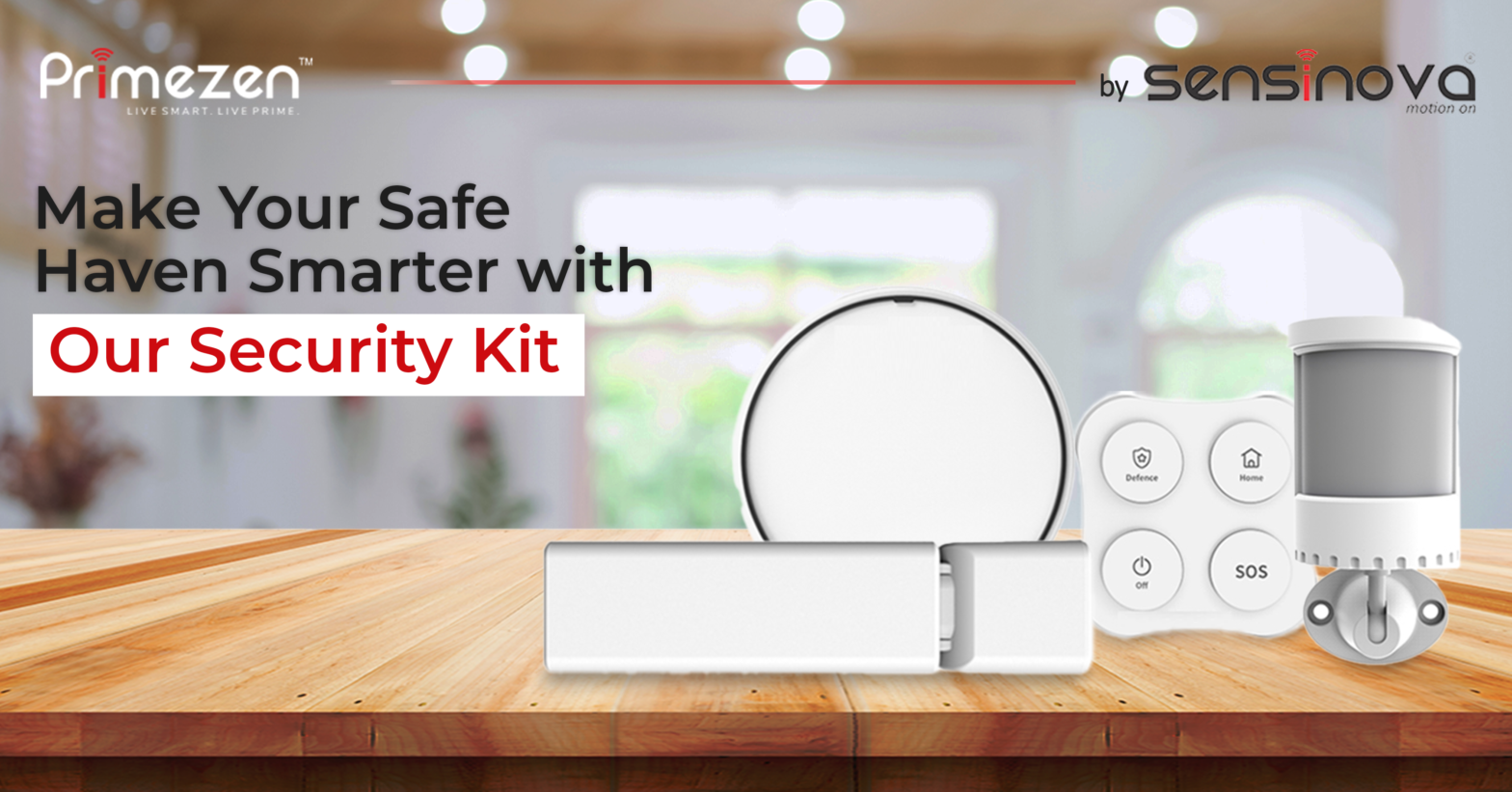
In a world where everything is getting smarter—phones, TVs, even fridges—it’s time your home security caught up. Gone are the days of relying solely on bulky locks and noisy alarms. Enter smart security kit, the ultimate guardians of modern living. These kits don’t just protect your home—they evolve it into a fortress of convenience, safety, and peace of mind. Let’s dive into why every homeowner needs one. What is a Smart Security Kit? A smart security kit is like your home’s personal bodyguard but with a techy twist. It’s a bundle of smart devices— wireless switches, smart door sensors, motion detectors —that work together to monitor, alert, and protect your home 24/7. Unlike traditional security systems, these kits sync with your smartphone and other smart home gadgets, letting you control everything from an app. Primezen’s security kits take this a step further by blending sleek design with intuitive tech, making security feel less like a chore and more like a superpower. How Does a Smart Security Kit Help with Home Automation? A smart security kit doesn’t just protect your home, it enhances the functionality of your entire home automation system. Imagine coming home after a long day, and the moment you step through the door, your smart security system disarms itself, the lights turn on, and the temperature adjusts to your preferred setting—all automatically. This is one of the many ways smart security kits can help with home automation. By integrating seamlessly with other smart devices, such as your lighting, temperature controls, and even entertainment systems, smart security kits take your home to the next level. For example, with Primezen’s Zen Door Sensor and Zen 10WW motion sensor, your home’s security can be activated automatically when you approach, turning on lights and unlocking doors for you. Additionally, with the S4 Series security device, you can easily monitor and control your home’s safety from your smartphone, ensuring your house is always protected. This level of integration adds immense convenience, making your home smarter, more responsive, and more energy-efficient. You no longer need to worry about manually activating your security system or forgetting to lock the door. With a smart security kit, everything is automated. How Does the Kit Work? Wireless technology is at the heart of any smart security kit, which allows devices to communicate and work together. Motion sensors, smart door sensors, and wireless switches are connected to a central hub communicating with your smartphone or tablet. Here’s how the system works: Sensors & Motion Detection: Primezen’s Zen 10WW motion sensor detects movement around your home, activating lights, alarms, or other connected devices based on pre-set triggers. Whether it’s a person walking in front of the sensor or a vehicle entering the driveway, the system can react accordingly to alert you or trigger an action, like turning on lights. Smart Door Sensors: The Zen Door Sensor plays a crucial role in monitoring access to your home. The sensor immediately notifies you when someone opens or closes a door or window. If your door is left open, the system will alert you, ensuring that no unauthorized access occurs. This sensor is particularly beneficial for keeping tabs on entry points that may be less secure. Wireless Switch Integration: The S4 Series integrates wireless switches that can control lights, security cameras, or even alarm systems from anywhere in your home. No longer will you have to go to each device to activate or deactivate it. With wireless switches, you can control everything from the comfort of your smartphone, whether in the house or miles away. Together, these devices form a comprehensive system that secures your home and offers convenience. Imagine being able to check the security status of your home with just a few taps on your phone. Or automatically arming your system when you leave the house and disarming it when you return. The peace of mind comes with knowing your home is always safe, no matter where you are. Features 1. Zen-10WW Wireless Switch What it does: Turn lights or appliances on/off with a quick press or from your phone. Why you’ll love it: No messy wires or complicated setup. Stick it on any wall (even in damp areas like bathrooms). Perfect for controlling lights without stumbling around at night. Extra perk: Connect it to alarms to make lights flash automatically if there’s a security issue. 2. Zen Door Sensor What it does: Keeps watch on doors and windows 24/7. If something’s left open, your phone gets an alert right away. Why you’ll love it: Small, simple, and installs in seconds. Once it’s up, you’ll barely notice it—until it warns you about an unlocked door. Extra perk: Works with Alexa or Google Assistant. Ask, “Is the garage locked?” and get an instant answer. 3. S4 Series Security Kit What it does: A complete set with door sensors, a hub, and wireless switches to protect your whole home. Why you’ll love it: Easy to customize (set alerts your way), install yourself in minutes, and add more devices later if needed. Extra perk: Stylish design that fits right into your home—so subtle, it might even look like décor. Primezen’s smart security kits aren’t just gadgets—they’re your home’s upgrade to the 21st century. You’re not just buying security with the Zen-10WW Wireless Switch, Zen Door Sensor, and S4 Series. You’re buying freedom from worry, wasted energy, and that nagging “did I lock the door?” feeling. As the saying goes, “A smart home is a safe home.” And with Primezen, it’s a stylish one too.
Why Smart Home Switches Are Essential for Modern Home Automation

In today’s tech-driven world, making your home smarter isn’t just a luxury—it’s a necessity. Whether you want to have a comfortable life, increase convenience, or enhance your home’s overall efficiency, smart home switches are the key to achieving all that and more. These intelligent devices transform how you control lighting, fans, and other electrical appliances, allowing you to manage your home with just a tap of a fingertip, a tap on your smartphone or even through voice commands. Let’s dive into why smart switches for home automation are so crucial and how they can benefit your home. What are Smart Home Switches? A smart switch is an advanced electrical switch that connects to your home’s network, allowing you to control it remotely through your smartphone or voice assistant. Unlike traditional switches that require physical force to operate, smart switches use wireless technology to enable you to control your lighting, temperature, and security systems from anywhere in the world. Think of it as an upgrade to the traditional on/off switch with features designed to make your life more convenient and energy-efficient. Features of Smart Home Switches Remote ControlOne of the most significant benefits of these switches is the ability to control them remotely. With a simple app on your phone, you can switch on your lights, adjust the thermostat, or control any connected appliances—whether at home or on vacation. Voice ActivationCompatibility with voice assistants like Alexa and Google Assistant makes smart switches incredibly convenient. You can simply say, “Turn on the living room lights,” and voila! Your command is instantly executed. This hands-free operation is perfect for busy individuals and those with mobility issues. Energy EfficiencySmart switches are designed to help reduce energy consumption. Many come with timers, dimming features, or even motion sensors that turn off lights when not in use. This means fewer chances of leaving lights on when you’re not around, helping lower your electricity bills and create a more sustainable home. Easy IntegrationSmart switches for home automation integrate easily into existing smart home ecosystems. They work seamlessly with other devices, such as smart bulbs, security cameras, or even thermostats, providing a centralized platform for controlling your entire home’s automation. How Does a Smart Switch Work? Smart switches operate through Wi-Fi, Bluetooth, or other wireless communication technologies, allowing them to connect to your home’s network. Once installed, these switches communicate with your phone or other connected devices through an app. Whether you want to turn on the lights as you enter the room or adjust the thermostat from your bed, smart switches easily make all of this possible. When you interact with a smart switch, the signal is sent from your device to the switch. This signal then instructs the connected appliance—be it a light, fan, or other device—to perform the desired action. These switches are innovative because they’re often compatible with voice-controlled systems, enabling you to manage your home using simple commands. Primezen Smart Switches: A Game Changer in Home Automation At Primezen, we’ve taken smart switches to the next level with our S1, S2, and S3 series. These products blend innovation, design, and practicality to enhance your home’s automation system. S1 Series: Designed with elegance and function, the S1 series allows for effortless control over your home’s lighting, fans, and more. With advanced features like dimming and easy connectivity to your smart home system, you’ll enjoy complete control at your fingertips. S2 Series: With waterproof features and wireless kinetic energy technology, the S2 series offers durability and reliability, even in high-humidity areas. These switches provide energy savings and advanced control in your home or office spaces. S3 Series: The S3 series is built for the modern, tech-savvy home. These switches offer high customizability, easy integration, and sleek designs to suit any home aesthetic. Whether it’s dimming, controlling multiple appliances, or energy-saving features, the S3 series has it all. These Primezen switches integrate seamlessly with your home automation system, offering convenience, control, and energy efficiency. Why Choose Smart Switches for Home Automation? Smart switches are essential because they offer more than just a way to turn on or off your lights. They integrate with your home’s overall automation system, helping to save energy, reduce costs, and enhance comfort. With smart switches, you can ensure that your home is always operating at peak efficiency, all while adding a touch of modern convenience. Primezen’s smart switches provide users with the ability to create customized home automation scenes, where you can set the perfect ambiance for any occasion—whether it’s a cozy evening, a productive morning, or a movie night. They give you the freedom to control your home environment effortlessly, whether you’re at home or away. If you want to create a smarter, more efficient home, smart home switches are the way to go. They simplify daily tasks, save energy, and provide ease of life over your home’s systems. Whether you’re looking for basic functionality or advanced features, Primezen’s smart switches for home automation offer the perfect solution. Explore our S1, S2, and S3 series smart switches today, and take your home automation to the next level. Ready to upgrade? Visit Primezen and experience the future of smart home technology!
What is Geofencing, and How Does it Transform Home Automation?

In the world of smart homes, convenience and efficiency are key. And when it comes to making our homes more automated, geofencing is one technology that stands out. But what exactly is geofencing, and how does it enhance the smart home experience? Let’s dive in! What is Geofencing? Geofencing is a virtual boundary created around a specific location. This boundary can be set up using GPS (Global Positioning System) or RFID (Radio Frequency Identification) to trigger specific actions when a device enters or exits that area. In-home automation it allows your smart devices, such as lights, air conditioning, and security systems, to respond automatically based on your location. Essentially, it uses your phone’s GPS to determine when you’re leaving or arriving at your home and triggers pre-set actions on the devices inside. How Does Geofencing Work? At its core, geofencing relies on the GPS technology in your smartphone. The system is controlled via an app connecting with all your smart devices. Here’s how it works: Set Boundaries: Using the app, you can create a virtual “fence” around your home, usually a hundred meters in radius. Trigger Actions: This system triggers pre-programmed actions once your phone enters or exits this boundary. For example, the system might turn on your lights or air conditioner when you approach your home, or it might turn them off when you leave. Custom Scenes: You can also set up multiple scenes for different moments of the day. For instance, when you’re leaving for work, the system could turn off all lights and close the curtains. When you return, the system can unlock the door, turn on the lights, and adjust the temperature. All of this happens seamlessly without you needing to control each device manually. Your home already knows what you want before you even get there! How Does Geofencing Transform Home Automation? Geofencing is a game-changer in home automation because it offers an entirely new level of convenience. Here’s how it transforms your daily life: Energy Efficiency: One of it’s biggest benefits is energy conservation. By automatically turning off lights, fans, and air conditioning when you leave, geofencing helps reduce energy waste. Similarly, it can adjust the temperature or lighting based on your return time, ensuring your home is always just how you like it when you return. Seamless Automation: Imagine driving home after a long day, and as soon as you get within a certain radius of your house, the lights automatically come on, the curtains open, and the air conditioning kicks into your preferred setting. You don’t need to lift a finger! Geofencing integrates with other smart devices like your security cameras or locks to ensure everything is in place and running smoothly. Enhanced Security: It also improves the security of your home. For example, if you forget to lock the door when you leave, the system can automatically lock it when you cross a predefined boundary. This provides peace of mind, knowing your home is secure even when not there. Real-World Examples of Geofencing in Action Automated Lighting and Temperature Control: When you’re on your way home, the lights and temperature adjust automatically. For instance, as you approach your home, the geofencing system can turn on the lights and adjust the thermostat to your preferred settings, creating a comfortable environment without any manual effort. Curtain Control: How about your curtains opening or closing depending on your presence? With this technology, you can set your curtains to automatically open when you arrive home and close when you leave, making your home feel more inviting and providing energy savings by controlling how much sunlight enters your space. Security and Safety: As soon as you leave your home, it can trigger the security system, turning on cameras, locking doors, and ensuring your property is safe. When you return, it could disarm the security system, unlocking doors for you automatically. Primezen and Geofencing: Making it Seamless Primezen’s Zen Touch Panels are perfect for integrating with geofencing technology. With these touch-sensitive panels, you can have all your home automation controls at your fingertips. Whether you want to manage your lighting, temperature, curtains, or security systems, Primezen’s advanced smart switches can sync perfectly with your geofencing setup. The Zen Touch Panels provide a sleek, modern interface that blends seamlessly into your home while offering robust functionality. With just a tap, you can customize and control your home automation settings, even taking advantage of geofencing for ultimate convenience. It is not just a futuristic technology; it’s transforming our lives today. By automating your home’s lighting, temperature, security, and more, geofencing makes life easier, safer, and more energy-efficient. It’s all about having a home that responds to your presence and provides convenience without lifting a finger. With Primezen’s smart solutions, like the Zen Touch Panels, you can experience seamless home automation, where geofencing works effortlessly in the background. The future of smart homes is here, and geofencing is leading the way. Try it today and step into a more convenient, energy-efficient, and secure home!
How Do I Choose the Right Light Controller for My Home?
In today’s fast-paced world, lighting control has moved beyond simple switches and dimmers. With the rise of smart homes, lighting control systems have evolved, making it easier than ever to customize your home’s lighting experience. Among the most advanced solutions are light controller, which allow you to manage the brightness, color temperature, and mood of each room. But with so many options available, how do you choose the right one for your home? Let’s explore the world of light controllers and how Primezen’s range of controllers stands out in terms of convenience, innovation, and ease of use. What is a Light Controller? A light controller is a device that enables you to manage your home’s lighting systems. Unlike traditional switches, light controllers are designed to provide greater flexibility and control over your lighting environment. With a light controller, you can adjust the brightness, color, and even mood of your lights from a single device, such as a smartphone or tablet. Controllers can be integrated into home automation systems, offering the convenience of controlling your lights remotely. Light controllers are often equipped with features like dimming, color-changing capabilities, and motion sensors. They offer more than just turning lights on and off—they allow you to create personalized lighting settings that match the time of day, the activity you’re doing, or your mood. Whether you’re hosting a dinner party, watching a movie, or just relaxing after a long day, a good light controller can instantly set the perfect atmosphere. How is Primezen’s Light Controller Unique? Primezen’s light controllers bring innovation and convenience to your home lighting experience. What makes Primezen unique in the world of lighting control is our RF (Radio Frequency) lighting control system. This system provides a seamless, reliable, and responsive connection, allowing you to control the lighting in your home effortlessly. Primezen’s light controllers are designed with ease of use and flexibility in mind. They enable you to control your home’s lighting with just a tap on your smartphone or tablet. Imagine being able to adjust the brightness or color of your lights from anywhere in your home. Whether you’re in the kitchen cooking or lying on the couch in the living room, you can set the perfect lighting in every room with the convenience of your mobile device. Additionally, Primezen’s light controllers integrate with home automation systems, so you can sync your lights with other smart devices in your home. You can customize the lighting to create the ideal ambiance for any occasion or time of day, all while saving energy and reducing your electricity bill. Experience the Magic of Synchronized Lighting One of the most exciting features of Primezen’s lighting control system is the ability to synchronize your lighting across multiple rooms. Imagine walking through your home and having every light adjust automatically to match the lighting scene you’ve selected. Whether it’s a soft, warm light for a cozy evening or a bright, white light for a productive day, Primezen’s light controllers offer a level of customization that traditional lighting systems can’t match. How Do I Choose the Right Light Controller for My Home? Now that you know what a light controller is and how Primezen’s technology can transform your lighting experience, the next step is choosing the right controller for your needs. Here are a few factors to consider when selecting a light controller for your home: 1. Determine Your Needs The first step is to identify what you want to achieve with your lighting control system. Are you looking for a basic dimmer, or do you want a system that allows you to change the color of your lights, set schedules, or control them remotely? Consider the following: Do you wish to adjust the brightness of your lights easily? Are you interested in creating different moods with various colors? Do you need a motion-sensing feature for automatic lighting? Knowing what features are essential for you will help narrow down your choices. 2. Compatibility with Your Home Automation System If you already have a home automation system or plan to set one up, ensure that the light controller you choose is compatible. Primezen’s light controllers are designed to integrate seamlessly with other smart devices. With features like RF + WiFi communication, you can control your lights from your smartphone, voice assistants (like Google Assistant or Alexa), or an app. 3. Choose the Right Type of Light Controller Primezen offers a wide range of light controllers to suit different needs. Here are a few of our popular options: ZEN-2C5W: A wireless switch that allows you to control your lighting with ease. It’s ideal for those looking for a simple solution with no wiring required. ZEN-DIMMER: For those who want to adjust the brightness of their lights to match the mood or activity, this dimmer offers smooth and precise control. ZEN-ANALOG DIMMER: This version allows you to fine-tune your lighting with a traditional feel while incorporating modern functionality. ZEN CCT W: For those who prefer controlling the warmth or coolness of their lighting, this controller offers complete control over color temperature. Each of these controllers provides different features, so choosing one depends on your specific needs. Choosing the right light controller for your home can significantly improve your living space’s ambiance, efficiency, and convenience. Whether you need basic dimming control, advanced color-changing options, or full integration with your home automation system, Primezen has the perfect solution. With energy-efficient designs and easy-to-use functionality, our light controllers offer a smarter, more flexible way to manage your home’s lighting. Experience the future of lighting today and transform your home with Primezen’s innovative solutions.