Introduction
Imagine walking into your home and having the lights turn on automatically. The fan adjusts to the perfect speed. The curtains draw themselves closed as the sun sets — all without you pressing a single button.
This is not a scene from a science fiction movie. This is smart home automation in 2026 — and it is happening right now, in Indian homes like yours.
For years, the biggest barrier to adopting smart home technology in India was the hassle of installation. Complex wiring. Drilling through walls. Replacing existing switchboards entirely. And then having to change batteries every few months.
Not anymore.
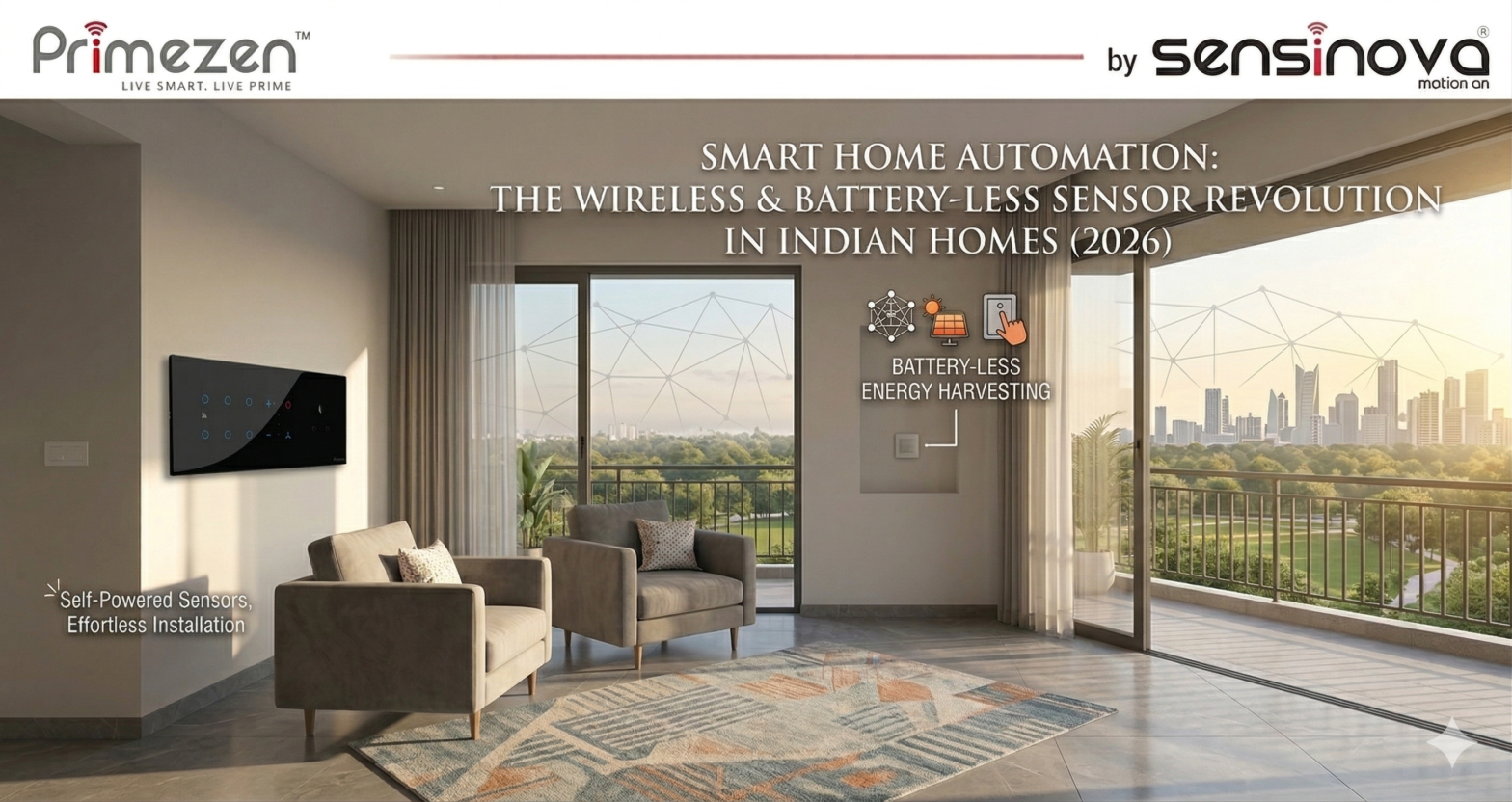
In 2026, the future of smart home automation is wireless and battery-less — and Indian homeowners are waking up to this revolution faster than ever before. Companies like Primezen are leading this charge with RF-based, kinetic-energy-powered solutions that are transforming how we interact with our homes.
In this guide, we will walk you through everything you need to know about smart home automation in 2026 — the technology behind it, why wireless and battery-less systems are the clear winners, and how you can get started today.
What Is Smart Home Automation?
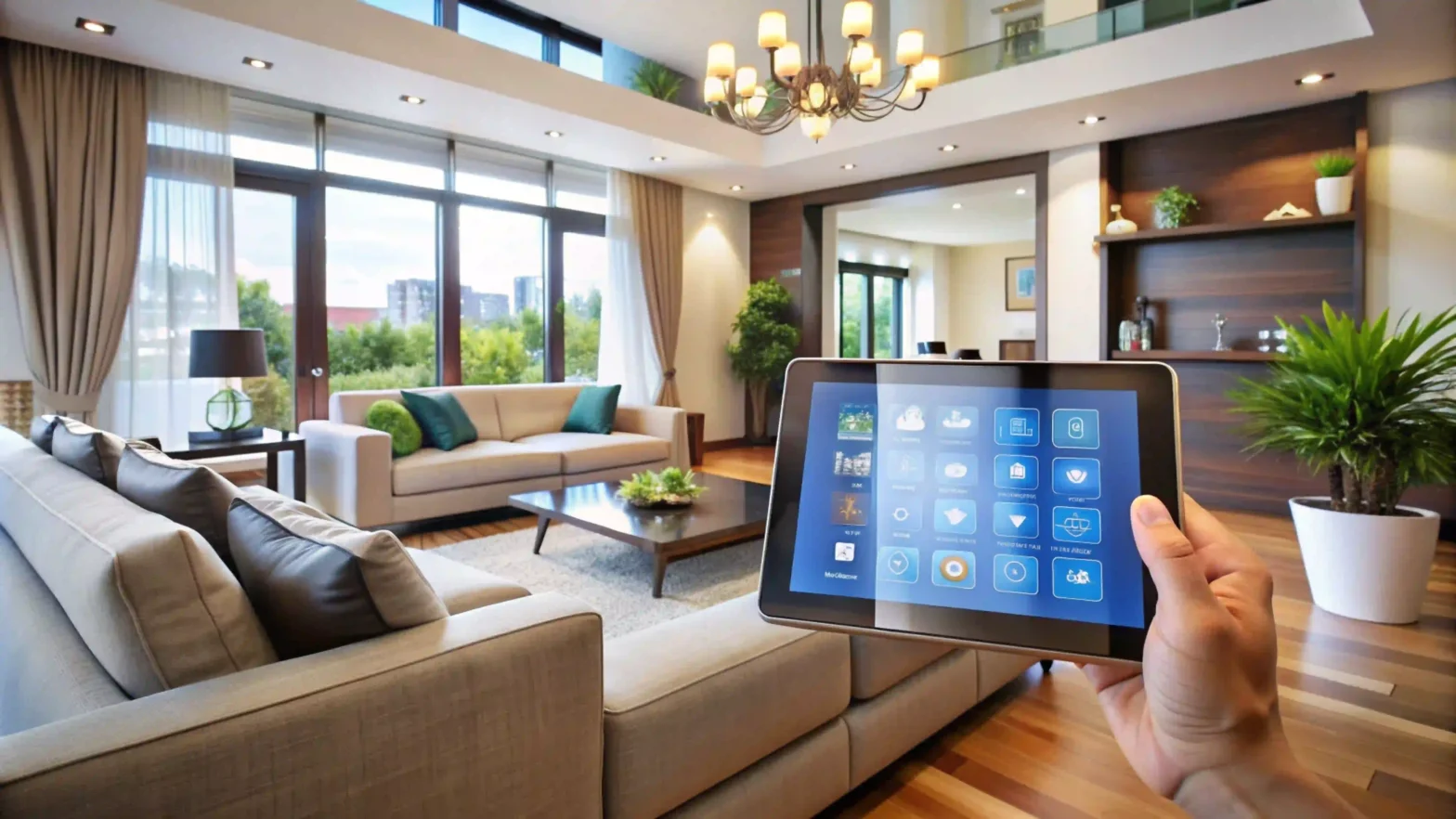
Smart home automation is the use of technology to control and automate the devices and systems in your home — lighting, fans, curtains, air conditioning, security, and more — either through a smartphone app, voice command, or automated schedules.
Instead of manually switching each appliance on and off, a smart home system connects everything together. You can control your entire home from one place, set it to run on schedules, and even let it learn your habits over time.
In simple terms: your home becomes intelligent. It works for you, not the other way around.
How Smart Home Automation Works
At its core, smart home automation relies on three things:
- Smart Devices — Switches, sensors, dimmers, curtain controllers, and more that can communicate with each other.
- A Communication Protocol — The technology that connects these devices. This can be Wi-Fi, Bluetooth, Zigbee, Z-Wave, or RF (Radio Frequency).
- A Control Interface — A smartphone app, touch panel, or voice assistant (like Alexa, Google Assistant, or Apple Siri) that lets you control everything.
What has changed dramatically in 2026 is the how. The shift to wireless, battery-less systems has removed the biggest obstacles that held Indian homeowners back.
The Smart Home Market in India: 2026 by the Numbers
The growth of smart home automation in India is nothing short of remarkable.
- The India home automation market was valued at $1.79 billion in 2018 and is projected to reach $13.57 billion by 2026 — growing at a CAGR of 29.8%.
- Wireless technologies dominate the market due to ease of installation, making them the preferred choice for both new homes and retrofitting existing ones.
- Government initiatives like Smart Cities Mission and Digital India are directly accelerating adoption across urban and semi-urban areas.
- The rise of affordable smartphones and widespread 4G/5G internet has made remote home control accessible to millions of Indian households.
This is not a niche market anymore. Smart home automation is becoming a mainstream expectation for modern Indian living — and 2026 is the year it truly reaches every corner of the country.
Why Wireless & Battery-Less Is the Clear Winner
There are two types of smart home automation systems: wired and wireless. For most Indian homes, the choice is clear — and here is why.
The Problem With Wired Systems
Traditional wired home automation systems require extensive rewiring of your entire electrical infrastructure. This means:
- Breaking walls to lay new cables
- Significant installation costs — often running into lakhs of rupees
- Weeks of disruption to your home
- Inflexibility — if you want to move a switch, you need to rewire again
For older homes, apartments, and rented properties, wired systems are practically impossible to install without a complete renovation.
The Advantage of Wireless Home Automation
Wireless smart home systems eliminate all of these problems. They use RF (Radio Frequency), Wi-Fi, or Bluetooth to communicate — meaning:
- No drilling or wall-breaking required
- Installation takes hours, not weeks
- Switches and sensors can be placed anywhere — no wiring constraints
- Works perfectly in existing homes and apartments
- Easy to expand or modify as your needs change
For India specifically, where millions of homes are older constructions or rented apartments, wireless home automation is the only truly practical option.
What Makes Battery-Less Even Better
Even among wireless systems, most solutions still require batteries — in the switches, sensors, and remotes. This creates ongoing maintenance costs and the risk of devices failing when batteries run out.
Battery-less wireless systems take this a step further. Using kinetic energy harvesting technology, these switches generate their own electricity from the physical act of pressing the switch. Every press creates enough energy to send a wireless signal — with zero batteries needed.
This means:
- Zero ongoing maintenance costs for battery replacement
- Switches work indefinitely — no dead batteries, no downtime
- Environmentally friendly — no battery waste
- Can be installed truly anywhere — no need for wiring or power supply
This is the technology that Primezen has pioneered in India — and it is setting a new standard for what smart home automation should look like.
Primezen: India’s Pioneer in Battery-Less Wireless Smart Home Automation
Primezen is India’s first and only company to have launched truly wireless, battery-less smart switches at scale. Founded with the mission of making smart home automation easy, convenient, affordable, and accessible to every Indian homeowner, Primezen has developed a complete ecosystem of wireless automation products.
The Technology Behind Primezen
Primezen’s solutions are built on ultra-low-power RF technology operating at 433 MHz, enabling:
- Stable long-range performance up to 200 metres outdoors
- Fast, secure, and reliable wireless communication
- Zero-delay switching for real-time wireless control
- Bluetooth connectivity for seamless interaction between devices
The kinetic energy conversion technology in Primezen’s switches transforms the energy generated by every single button press into enough electrical power to operate the low-power electronic switch — no wiring needed, no batteries needed, ever.
Primezen’s Product Range
Primezen offers a complete smart home ecosystem designed for Indian homes:
- Wireless Kinetic Switches — Battery-less switches in S1, S2, and S3 series
- Touch Panels — Sleek, elegant touch-sensitive control panels for sophisticated control
- Lighting Control — Smart dimming and scene-setting for every room
- Curtain Control — Automated curtains and blinds at the touch of a button
- Gateway — The brain of your system that connects all devices
- Motion Sensors — Automated responses to movement
- Universal Remote Control — One remote for your entire home
- Heavy Load Control — Manage high-power appliances smartly
- Security Kit — Integrated smart security for peace of mind
- Doorbell Set — Smart doorbell integration
All of these work together through a single app and are compatible with Amazon Alexa, Google Assistant, and Apple Siri — giving you complete voice control over your home.
5 Reasons Smart Home Automation Is the Future of Indian Homes
1. Convenience That Changes Daily Life
With smart home automation, your morning routine transforms completely. Set a schedule so your lights turn on gradually at 6 AM, your geyser heats up automatically, and your curtains open to let in natural light — before you even get out of bed.
When you leave for work, one tap on your smartphone turns off all the lights, fans, and appliances you may have forgotten to switch off. When you are stuck in traffic, you can turn on your AC from your phone so you walk into a cool home.
This level of convenience is not a luxury — it is a genuine quality-of-life improvement.
2. Real Energy Savings
Smart home systems are proven energy savers. Automated lighting that turns off when you leave a room, ACs that adjust based on occupancy, and appliances that run only when needed can reduce household energy consumption significantly.
Studies show that smart home automation systems can achieve an average energy cost optimisation of 15-20%. Over a year, this represents meaningful savings on your electricity bills.
3. Enhanced Safety and Security
Smart home automation dramatically improves home security. Motion sensors detect unexpected movement, smart cameras give you real-time video from anywhere in the world, and smart locks let you control who enters your home even when you are not there.
You can simulate presence by scheduling lights to turn on and off even when you are away — a powerful deterrent for intruders.
4. Designed for Indian Homes — No Rewiring Needed
One of the most important factors for Indian homeowners is that wireless systems like Primezen install inside your existing switchboards without any wall-breaking or rewiring. This means you can upgrade any room in your home — whether it is a 10-year-old apartment or a brand-new house — without disruption or excessive costs.
5. Future-Ready and Scalable
Start with just one room and expand as you go. Primezen’s ecosystem is completely scalable — add switches, sensors, and controllers one by one as your budget and needs grow. Your initial investment protects your future upgrades because the system is designed to grow with you.
Wireless vs Wired Smart Home Automation: Quick Comparison
Feature | Wireless (Primezen) | Wired Traditional |
Installation | No drilling, no rewiring | Extensive rewiring needed |
Cost | Affordable, scalable | High upfront cost |
Works in old homes | Yes | Difficult/expensive |
Battery requirement | None (kinetic) | N/A |
Flexibility | High — move switches anywhere | Very limited |
Expansion | Easy — add devices anytime | Complex and costly |
Voice control | Yes (Alexa, Google, Siri) | Limited |
Works in rented homes | Yes | No |
How to Get Started With Smart Home Automation
Getting started is simpler than you might think. Here is a step-by-step approach:
Step 1: Identify your priorities Start with the areas that will have the biggest impact on your daily life. Most homeowners begin with lighting control and fan control — the switches you use most often.
Step 2: Choose your system Opt for a wireless, battery-less system like Primezen to avoid installation hassles and ongoing maintenance costs.
Step 3: Install the Gateway The Primezen Gateway connects all your devices together and links them to your home’s Wi-Fi. It can pair with up to 50 transmitters — enough for most homes.
Step 4: Replace your switches Primezen switches install directly inside your existing switchboards. No wall-breaking, no rewiring. Most installations are completed in a few hours.
Step 5: Set up the app and voice control Link your system to the Primezen app and connect to Alexa, Google Assistant, or Siri. Start creating scenes and schedules immediately.
Step 6: Expand gradually Add curtain control, motion sensors, security cameras, and more as you go — at your own pace and budget.
Real Benefits of Primezen Smart Home Automation
Here is what actual Primezen users experience after installation:
- Control lighting, fans, and appliances from anywhere — whether you are in the next room or another city
- Automated schedules — lights and appliances follow your routine without manual intervention
- Energy monitoring — know exactly which appliances are consuming the most power
- Clean interiors — no clunky wiring or unsightly cables spoiling your home’s aesthetics
- Peace of mind — know your home is secure even when you are away
- Voice commands — control everything hands-free through Alexa, Google, or Siri
The Bigger Picture: India’s Smart City Mission and Smart Homes
India’s government-backed Smart Cities Mission is accelerating the adoption of connected technology across urban India. As broadband penetration deepens into tier 2 and tier 3 cities and as 5G rollout continues, the infrastructure for smart home automation is becoming available to millions more Indian households.
This is the perfect time to invest in smart home automation — prices are competitive, technology is mature, and the ecosystem of products and support is stronger than ever before.
The question for Indian homeowners in 2026 is no longer whether to adopt smart home automation. The question is simply when — and the answer is now.
Conclusion
Smart home automation in 2026 is no longer a distant dream or a luxury reserved for the ultra-wealthy. It is a practical, affordable, and increasingly essential part of modern Indian living.
Wireless and battery-less technology has removed the two biggest barriers that held Indian homeowners back — complex installation and ongoing maintenance. With systems like Primezen, upgrading your home is as simple as replacing your existing switches, setting up the app, and enjoying a smarter way of living from day one.
The India smart home market is on a powerful growth trajectory. The technology is ready. The ecosystem is mature. The question is not whether your home will become smart — it is whether you will be ahead of the curve or playing catch-up.