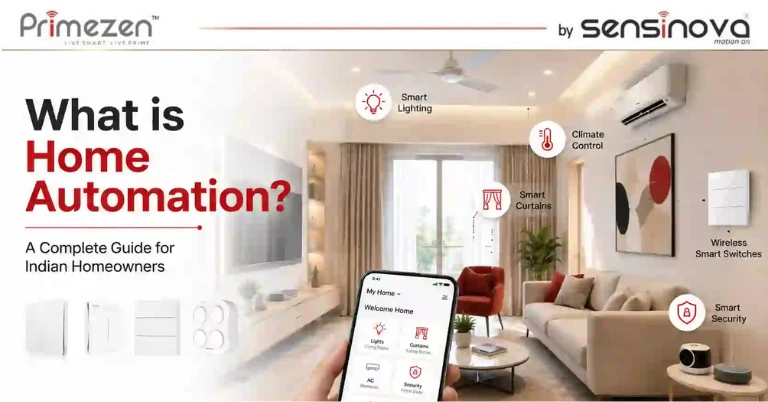
Imagine coming home after a long day at work. Before you even open the front door, your home already knows you are back. The lights in the hallway switch on, the air conditioner starts cooling the room to your preferred temperature, and your favourite music begins to play softly in the background. You did not press a single button. Your home simply did it for you.
This is not a scene from a science fiction film. This is home automation — and it is happening in thousands of Indian homes right now, in cities like Ahmedabad, Bangalore, Mumbai, Pune, Hyderabad, and Delhi.
Over the past few years, home automation has gone from being a luxury concept reserved for ultra-premium bungalows to an accessible, affordable upgrade for everyday Indian apartments and independent homes. Thanks to Indian-first brands like Primezen, building a smart home no longer requires breaking the bank or calling a team of engineers to rewire your entire house.
In this complete guide, we will walk you through everything you need to know about home automation in India — what it is, how it works, what devices are involved, the real benefits, common misconceptions, and exactly how you can get started.
What Exactly is Home Automation?
Home automation refers to the use of technology to control, monitor, and automate the devices and systems inside your home — without you having to physically interact with them every single time. It connects your appliances, lighting, security systems, entertainment, and even your doors and windows to a central platform, allowing them to communicate with each other and respond to commands intelligently.
In simple terms, home automation makes your home smarter. Instead of walking to a switch to turn off the fan, you say ‘turn off the fan’ and it switches off. Instead of waking up to manually close the curtains every morning, a schedule does it automatically at sunrise. Instead of worrying whether you left the AC on after leaving home, you check your phone and turn it off remotely.
The concept is also referred to as a smart home system or home automation system. At a broader level, home automation is a part of the Internet of Things (IoT) — a technology framework where everyday physical objects are connected to the internet and can send and receive data.
How Does Home Automation Work?
Every home automation system is built around three core elements: devices, a hub or gateway, and a control interface. Understanding how these three work together will help you visualise exactly what a smart home looks like in practice.
1. Smart Devices
These are the individual products installed in your home — smart switches, smart lights, motion sensors, smart locks, cameras, smart plugs, and so on. Each device is capable of connecting to a network and receiving commands.
2. The Hub or Gateway
The hub is the brain of the entire system. It acts as the central controller that all your smart devices connect to. When you give a command — whether through an app, a voice assistant, or an automated schedule — the hub receives that command and sends the appropriate signal to the relevant device.
Primezen’s Zen Gateway is a prime example of a smart home hub built specifically for Indian homes. It connects all Primezen devices on a single local network, enabling both remote control and fully offline local control — meaning your smart home keeps working even when the internet is down.
3. The Control Interface
This is how you interact with your smart home. Control interfaces include:
- Smartphone apps (Android and iOS) — control everything from anywhere in the world
- Voice assistants like Amazon Alexa or Google Assistant — use simple voice commands
- Smart touch panels on your walls — manually control devices with a sleek glass-finish switch
- Automated rules and schedules — set routines so your home runs itself
Communication Protocols Used in Home Automation
Smart devices in a home automation system communicate using wireless protocols. The most common ones used in India are:
- Wi-Fi — the most widely used; good range but consumes more power
- Zigbee — low-power mesh network ideal for large homes with many devices
- Z-Wave — similar to Zigbee, commonly used in security systems
- Bluetooth — short-range, best for devices used nearby like speakers and locks
Primezen devices primarily use a combination of Wi-Fi and proprietary mesh protocols, ensuring stable and reliable connectivity throughout your home.
Key Devices in a Home Automation System
A home automation system can include as few or as many devices as you like. Here is an overview of the most popular and practical devices available in India today:
Smart Lighting
Smart lighting allows you to control the brightness, colour, and on/off state of your lights remotely or automatically. You can dim the lights for movie nights, set them to wake you up gradually in the morning, or create different ‘scenes’ for different moods. Smart lights can be scheduled, voice-controlled, and integrated with motion sensors so they turn on only when someone is in the room — saving considerable electricity.
Smart Switches and Touch Panel Switches
Smart switches are one of the most impactful and cost-effective upgrades in any Indian home. They replace your existing modular switches and give you remote control, scheduling, and voice control over any device connected to that switch — fans, lights, geysers, and more.
Primezen offers some of India’s best touch panel switches — available in 2, 4, 6, and 8 module configurations with a premium glass finish. They fit standard Indian gang boxes without the need for rewiring, making them an ideal first step into home automation for most homeowners.
Home Automation Gateway
As explained earlier, the gateway or hub is what ties your entire smart home together. Without a reliable gateway, individual smart devices work in isolation. A gateway like the Primezen Zen Gateway creates a unified ecosystem where all your devices communicate, automate, and respond as one coordinated system.
Motion Sensors
Motion sensors detect movement in a room and can trigger actions automatically — turning on lights when you enter a corridor, switching off a fan when a room has been empty for a set duration, or sending a security alert when movement is detected in your home while you are away. They are energy-saving, practical, and simple to install.
Smart Security Systems
A complete smart home security setup typically includes smart cameras (indoor and outdoor), smart video doorbells, smart door locks, and motion-triggered alert systems. These devices give you 24/7 visibility into your home from anywhere in the world, real-time push notifications, and the ability to remotely lock and unlock your front door.
Smart Entertainment
Smart IR blasters replace multiple remote controls by connecting your TV, AC, set-top box, and audio system to a single app. You can create one-tap ‘scenes’ — for example, a ‘Movie Mode’ that dims the lights, lowers the blinds, and switches on the TV simultaneously.
Smart Curtain and Blind Controllers
Motorised curtain and blind controllers automate your window treatments. Set them to open at sunrise and close at sunset, integrate them with scenes, or control them with a voice command. They add both convenience and a high-end feel to any room.
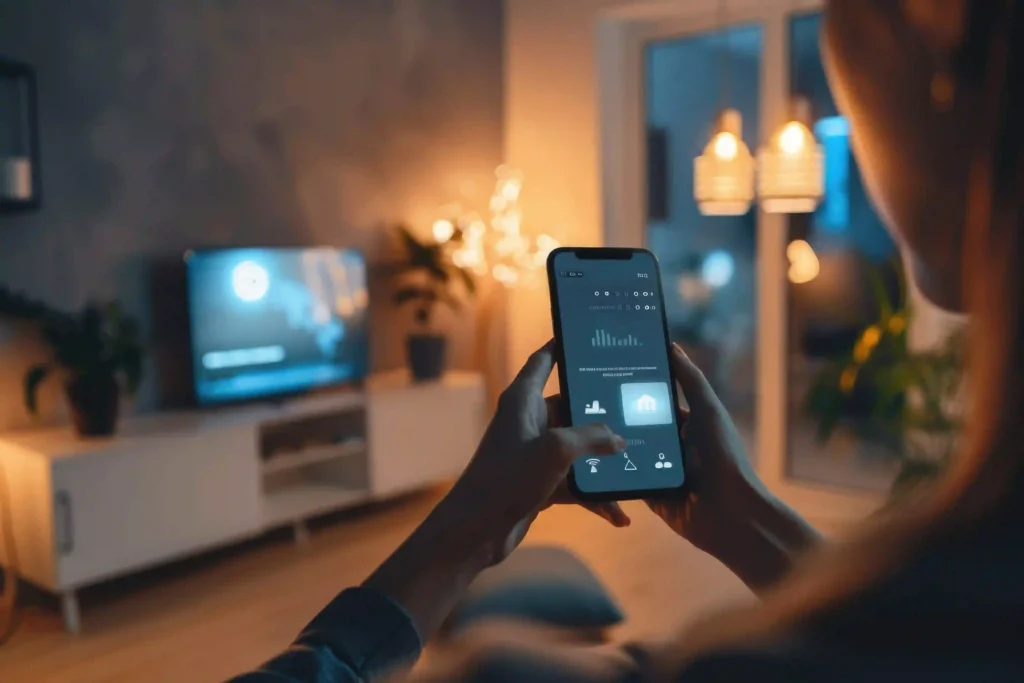
Types of Home Automation Systems
Not all home automation systems are built the same way. Broadly, they fall into two categories:
Wired Home Automation Systems
Wired systems require structured cabling to be laid during the construction or major renovation of a home. They are highly reliable and interference-free but are expensive and complex to install. They are best suited for under-construction homes where wiring can be planned from scratch. Wired systems typically cost significantly more than wireless alternatives.
Wireless Home Automation Systems
Wireless systems — like those offered by Primezen — use Wi-Fi, Zigbee, or proprietary mesh networks to connect devices without the need for additional cabling. They can be installed in existing homes without any major renovation. They are more affordable, flexible, and scalable, making them the preferred choice for the vast majority of Indian homeowners.
What Are the Real Benefits of Home Automation for Indian Homeowners?
Home automation delivers value across several dimensions of daily life. Here is a detailed look at the genuine benefits:
Unmatched Convenience
The most immediate benefit of home automation is convenience. Controlling all your home’s devices from a single app — or with a simple voice command — eliminates the small but constant friction of daily life. Turning off all lights before bed, switching on the geyser ten minutes before your bath, or locking the front door without leaving your sofa — home automation handles it all effortlessly.
Significant Energy Savings
In India, where electricity bills are a significant monthly expense, home automation offers meaningful savings. Automated schedules ensure that lights, fans, and ACs are never left running unnecessarily. Motion sensor lights eliminate the habit of forgetting to switch off lights in empty rooms. Studies on smart home energy usage consistently show savings of 20 to 30 percent on monthly electricity bills after home automation installation.
Enhanced Home Security
Smart cameras, video doorbells, smart locks, and motion alerts give you a level of security awareness that simply is not possible with traditional setups. You receive real-time notifications on your phone the moment any unusual activity is detected at your home, whether you are in the next room or in another country.
Remote Monitoring and Control
With home automation, your home is always within reach. Check whether the geyser was accidentally left on. See who rang the doorbell while you were away. Let in a family member remotely by unlocking the smart lock from your phone. Remote access and control is one of the most valued features by working professionals and frequent travellers.
Elevated Lifestyle and Home Aesthetics
Beyond the functional benefits, smart home devices simply look and feel premium. Primezen’s glass-finish touch panels replace plastic modular switches with sleek, minimalist panels that complement contemporary Indian interior design. Automations like a ‘Good Morning’ scene — where curtains open, lights turn on gently, and the kettle starts — elevate the everyday living experience in ways that are hard to describe until you experience them.
Higher Property Value
In India’s growing real estate market, smart homes are increasingly commanding a premium. Buyers, especially in the 30-45 age group, actively look for pre-installed home automation systems when purchasing flats or villas. Installing a smart home system from Primezen can add 5 to 10 percent to the perceived value of your property.
Common Misconceptions About Home Automation in India
Despite the growing awareness, several misconceptions hold Indian homeowners back from adopting home automation. Let us address the most common ones:
‘Home Automation is Too Expensive’
This was perhaps true five years ago. Today, you can automate a single room with Primezen devices for as little as ₹8,000 to ₹15,000. A complete 2BHK smart home setup can be built for ₹40,000 to ₹80,000 — comparable to the cost of a mid-range sofa set, but with far greater daily value.
‘I Need to Rewire My Entire Home’
Wireless home automation systems require no rewiring. Primezen’s smart switches fit directly into existing gang boxes and work with your existing wiring. The installation is quick, clean, and requires no major civil work.
‘It Will Stop Working if the Internet Goes Down’
The Primezen Zen Gateway supports full local control. Your devices continue to work within your home network even without internet connectivity. You can still use touch panels, app control on the local network, and automated schedules — completely offline.
‘It is Too Complicated to Use’
Modern home automation apps are designed to be intuitive and user-friendly. If you can use WhatsApp or Swiggy, you can use a smart home app. Primezen’s app is available in English and supports simple one-tap control, easy scheduling, and straightforward device management.
How to Get Started with Home Automation in India
Getting started is easier than most people expect. Here is a simple step-by-step approach:
- Identify your needs: Start by listing which problems you want to solve — energy savings, convenience, security, or aesthetics.
- Choose a platform: Select a brand with a reliable app, a strong hub ecosystem, Indian-standard compatibility, and local customer support. Primezen ticks all these boxes.
- Start with one room: The living room or master bedroom is typically the best starting point. Replace switches with Primezen touch panel switches and add a smart light or two.
- Add a gateway: Install the Primezen Zen Gateway to connect all your devices into one unified system.
- Expand gradually: Add devices over time — motion sensors, smart locks, cameras, smart plugs — as your comfort and budget allow.
- Get professional installation: Primezen’s certified installation partners are available across major Indian cities to ensure correct and safe installation.
Frequently Asked Questions
What is the difference between a smart home and home automation?
The two terms are often used interchangeably. ‘Smart home’ is the broader lifestyle concept, while ‘home automation’ specifically refers to the technology and systems that make a home smart. All smart homes use home automation, but home automation is the technical foundation.
Can home automation be installed in a rented flat?
Yes. Primezen’s wireless smart switches and devices require no permanent modifications and are designed for easy removal. Many renters install smart home devices in their rented homes and take them along when they move out. Always consult your landlord before making any electrical modifications.
Is home automation safe for Indian homes with frequent power cuts?
Yes. Primezen devices are built for Indian power conditions, including voltage fluctuations and frequent outages. Smart devices reconnect automatically after a power cut and resume their previous state. Certain devices like smart cameras and locks can also be fitted with battery backups for uninterrupted operation.
Which is the best home automation brand in India?
Primezen is one of India’s leading home automation brands, offering products specifically engineered for Indian homes — Indian voltage standards, Indian wiring configurations, and weather conditions. With local customer support and a growing network of certified installation partners across the country, Primezen provides reliability and peace of mind that imported brands often cannot match.
How long does it take to install a home automation system?
A basic single-room setup can be completed in two to three hours. A full 2BHK home automation installation with switches, gateway, sensors, and smart security typically takes one full day. Primezen’s installation partners work efficiently to minimise disruption to your daily routine.
Conclusion
Home automation is no longer a concept of the future — it is a practical, accessible, and affordable upgrade for any Indian home today. Whether you live in a compact 1BHK apartment or a spacious 4BHK villa, the right smart home system transforms the way you experience your living space every single day.
It brings convenience you will wonder how you lived without, energy savings that reflect on your monthly bills, security that gives you real peace of mind, and a premium quality of life that makes coming home feel genuinely special.
Primezen makes all of this possible for Indian homes — with products designed for Indian conditions, installation support across the country, and a commitment to making smart living accessible for every family.
Visit www.primezen.in to explore the full range of home automation products, request a free consultation, or find a Primezen-certified installer near you.
🌐 primezen.in | Contact Primezen for Vadodara dealer and installation details