Installing an automatic light sensor for home is one of the simplest upgrades that makes itself felt every single day. Lights come on when you enter a room and switch off when you leave without touching a switch, without forgetting, and without wasting electricity on empty spaces.
This guide covers everything you need to know about choosing and using an automatic light sensor for home: how the technology works, which Primezen sensors suit which rooms, and how they connect to a smarter, more energy-efficient home overall.
What Is an Automatic Light Sensor and How Does It Work?
An automatic light sensor for home detects movement or human presence and uses that signal to control the lights in that area. When someone enters the space, the sensor triggers the light on. When no movement is detected for a set period adjustable to your preference the light switches off automatically.
The sensor feeds into your smart home system wirelessly, working alongside your lighting controllers and automation routines. No manual override needed. No habit change required from anyone in the household. The home simply responds to where people are.
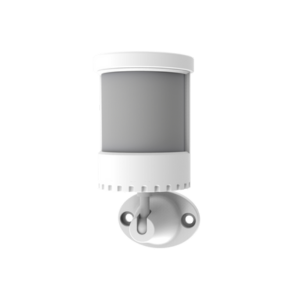
Primezen offers two motion sensors built specifically for home automation: the ZEN-10WW and the IRIS-12W. Both are available through the Primezen motion sensor range and connect seamlessly with the full Primezen smart home ecosystem app control, voice control via Alexa and Google Home, and scene-based automation included.
ZEN-10WW and IRIS-12W: The Right Sensor for Every Room
ZEN-10WW — Wide Coverage for Open Living Spaces
The ZEN-10WW is the automatic light sensor for home spaces that need broad, wide-area detection. Living rooms, open-plan areas, large bedrooms, and hallways — anywhere movement happens across a wide zone are where this sensor performs best.
When presence is detected, the ZEN-10WW triggers connected lights instantly. When the space is unoccupied for the configured delay, lights switch off automatically. Energy is saved without anyone needing to think about it.
IRIS-12W — Precision Detection for Focused Areas
The IRIS-12W is the automatic light sensor for home areas that need focused, accurate triggering. Bathrooms, staircases, entrances, store rooms, and utility spaces are the ideal fit smaller zones where precision matters more than range.
Its compact design allows for discreet installation, and like all Primezen devices, settings such as sensitivity, delay timers, and scene triggers can be adjusted directly from the Primezen app.
How an Automatic Light Sensor Reduces Your Electricity Bills
The energy-saving argument for an automatic light sensor for home is simple: a light that is not on cannot consume electricity. In most Indian homes, corridor lights, bathroom lights, store room lights, and staircase lights are left on for hours beyond when they are needed not out of carelessness, but out of habit.
With an automatic light sensor for home managing these areas, lighting runs only when someone is genuinely present. Across a full month especially in multi-floor homes or properties with large common areas the reduction in unnecessary consumption is consistently noticeable on the electricity bill.
Homes with children see the benefit even more directly. Asking children to switch lights off is a daily reminder that rarely sticks. A motion sensor removes that dependency entirely the lights behave correctly whether anyone remembers or not.
For a further layer of energy intelligence, both sensors pair with the Primezen light controller allowing you to schedule brightness levels by time of day alongside presence detection. Full brightness in the morning, dimmed in the evening, off overnight in unused spaces. Presence-based and schedule-based control working in combination.
Where an Automatic Light Sensor for Home Makes the Most Difference
An automatic light sensor for home delivers the strongest return in spaces that are used frequently but briefly, and where lights are most often left on by oversight.
Entrance and Foyer
The entrance is the first space everyone encounters upon arriving home. Lights that activate automatically as you walk in and switch off when the foyer is empty make for a seamless, effortless arrival. Particularly useful when your hands are full.
Staircases
Staircase lighting is a genuine safety consideration, especially at night. An automatic light sensor for home staircases ensures the path is always lit when in use and dark when it is not no fumbling for switches, no leaving the staircase light burning all evening.
Bathrooms and Utility Rooms
Bathrooms and utility rooms are where an automatic light sensor for home pays for itself fastest. These are high-use, short-stay spaces lights are left on by default far more often than they need to be. A sensor corrects this reliably, every time.
Children’s Bedrooms
A motion sensor in a child’s bedroom means lights are off during school hours, during naps, and through the night regardless of whether anyone remembered to switch them off. No reminders needed.
Parking and Covered Outdoor Areas
Garages, covered parking, and outdoor utility areas are strong candidates for automatic light sensor for home installation. Hands are usually occupied in these spaces, manual switches are inconvenient, and lights are regularly left active when no one is present. The IRIS-12W is well suited here given its focused detection capability.
Building a Complete Automatic Lighting System
A single automatic light sensor for home is useful. A network of sensors connected to a unified smart home platform is significantly more powerful enabling your home to manage its lighting intelligently across every room, simultaneously.
When all your sensors, controllers, touch panels, and appliances connect to the same system, automation scenes become genuinely coordinated. The entrance light comes on when you arrive. The bathroom light activates when you enter at night. The corridor dims when the household settles in for the evening. All of this happens without manual input.
The Primezen home automation gateway is the hub that brings this together connecting your ZEN-10WW and IRIS-12W sensors to the Primezen app, voice assistants, touch panels, curtain controllers, and every other smart device in your home. Sensitivity settings, delay timers, multi-device scenes, and remote monitoring are all managed from one place.
Scene Example: Evening Arrival
After 6:30 PM, the automatic light sensor for home at the entrance detects movement. The entrance lights activate at 70% brightness, the hallway lighting adjusts to a warm scene, and the foyer fan switches on. Four minutes after the last detected movement, everything resets automatically no switches touched, no commands spoken.
Choosing the Right Automatic Light Sensor for Your Home
Selecting the right automatic light sensor for home use comes down to the size of the space and the type of detection you need. The ZEN-10WW covers larger, open areas with wide-angle sensitivity. The IRIS-12W is better suited to smaller, focused spaces where precision is more important than range.
Most homes benefit from a combination of both: ZEN-10WW for living areas, hallways, and large bedrooms; IRIS-12W for bathrooms, staircases, and utility spaces. Getting the right automatic light sensor for home in each room makes the difference between automation that works reliably and automation that occasionally misses or over-triggers.
If you are unsure which sensor suits which space, contact the Primezen team for a consultation. We will assess your home layout and recommend the right combination of sensors to give you reliable, energy-efficient automatic lighting throughout.