Auto-generated post_excerpt
Author: admin
Vang de Golf van Aanwinst in het Big Bass Splash Spelavontuur
Auto-generated post_excerpt
Entfessle den Nervenkitzel mit dem Odibets Aviator Zugang
Auto-generated post_excerpt
Tatlı Bonanza Casino için Şansınızı Artıracak Promo Kodu Keşfedin
Auto-generated post_excerpt
Sanjajte in zmagujte v svetu great win casino si
Auto-generated post_excerpt
cw-check-https://fdfd.com/
cw-check https://fdfd.com
Coronavirus disease 2019
COVID-19 is a contagious disease caused by the coronavirus SARS-CoV-2. In January 2020, the disease spread worldwide, resulting in the COVID-19 pandemic. The symptoms of COVID‑19 can vary but often include fever,[7] fatigue, cough, breathing difficulties, loss of smell, and loss of taste.[8][9][10] Symptoms may begin one to fourteen days after exposure to the virus. At least a third of people who are infected do not develop noticeable symptoms.[11][12] Of those who develop symptoms noticeable enough to be classified as patients, most (81%) develop mild to moderate symptoms (up to mild pneumonia), while 14% develop severe symptoms (dyspnea, hypoxia, or more than 50% lung involvement on imaging), and 5% develop critical symptoms (respiratory failure, shock, or multiorgan dysfunction).[13] Older people have a higher risk of developing severe symptoms. Some complications result in death. Some people continue to experience a range of effects (long COVID) for months or years after infection, and damage to organs has been observed.[14] Multi-year studies on the long-term effects are ongoing.[15] COVID‑19 transmission occurs when infectious particles are breathed in or come into contact with the eyes, nose, or mouth. The risk is highest when people are in close proximity, but small airborne particles containing the virus can remain suspended in the air and travel over longer distances, particularly indoors. Transmission can also occur when people touch their eyes, nose, or mouth after touching surfaces or objects that have been contaminated by the virus. People remain contagious for up to 20 days and can spread the virus even if they do not develop symptoms.[16] Testing methods for COVID-19 to detect the virus’s nucleic acid include real-time reverse transcription polymerase chain reaction (RT‑PCR),[17][18] transcription-mediated amplification,[17][18][19] and reverse transcription loop-mediated isothermal amplification (RT‑LAMP)[17][18] from a nasopharyngeal swab.[20] Several COVID-19 vaccines have been approved and distributed in various countries, many of which have initiated mass vaccination campaigns. Other preventive measures include physical or social distancing, quarantining, ventilation of indoor spaces, use of face masks or coverings in public, covering coughs and sneezes, hand washing, and keeping unwashed hands away from the face. While drugs have been developed to inhibit the virus, the primary treatment is still symptomatic, managing the disease through supportive care, isolation, and experimental measures.
The Founding of YouTube A Short History
YouTube is one of the most influential platforms in modern media, but its origin story is surprisingly simple: a small team wanted an easier way to share video online. In the early 2000s, uploading and sending video files was slow, formats were inconsistent, and most websites weren’t built for smooth playback. YouTube’s founders focused on removing those barriers—making video sharing as easy as sending a link. Who Founded YouTube? YouTube was founded by three former PayPal employees: Chad Hurley, Steve Chen, and Jawed Karim. They combined product thinking, engineering skills, and a clear user goal: create a website where anyone could upload a video and watch it instantly in a browser. Chad Hurley — product/design focus and early CEO role Steve Chen — engineering and infrastructure Jawed Karim — engineering and early concept support The Problem YouTube Solved At the time, sharing video often meant emailing huge files or dealing with complicated players and downloads. YouTube made video: Uploadable by non-experts (simple interface) Streamable in the browser (no special setup) Sharable through links and embedding on other sites Early Growth and the First Video YouTube launched publicly in 2005. One of the most famous early moments was the first uploaded video, “Me at the zoo,” featuring co-founder Jawed Karim. The clip was short and casual—exactly the kind of everyday content that proved the platform’s big idea: ordinary people could publish video without needing a studio. Key Milestones Timeline Year/Date Milestone Why It Mattered 2005 YouTube is founded and launches Introduced easy browser-based video sharing 2005 “Me at the zoo” is uploaded Became a symbol of user-generated video culture 2006 Google acquires YouTube Provided resources to scale hosting and global reach Why Google Bought YouTube By 2006, YouTube’s traffic was exploding. Video hosting is expensive—bandwidth and storage costs rise fast when millions of people watch content daily. Google’s acquisition gave YouTube the infrastructure and advertising ecosystem to grow into a sustainable business. What YouTube’s Founding Changed YouTube didn’t just create a popular website; it reshaped how people learn, entertain themselves, and build careers online. Its founding helped accelerate: Creator-driven media and influencer culture How-to education and free tutorials at massive scale Music discovery, commentary, and global community trends From a small startup idea to a global video powerhouse, YouTube’s founding is a classic example of a simple product solving a real problem—and changing the internet in the process.
Smart Switch vs Normal Switch: Which One Is Actually Worth Installing in Your Home?
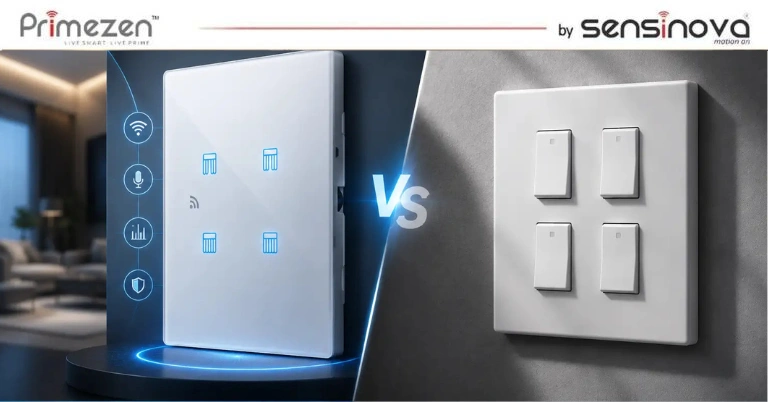
Introduction You are renovating your home or shifting into a new flat. The electrician has come to finalise the switchboard layout and casually mentions — do you want regular switches or those fancy touch panels? You have seen smart switches at a friend’s place, or perhaps in a showroom. They look premium. But a small voice in the back of your head asks — is it really worth spending five to ten times more on a switch? It is a completely valid question. And it deserves an honest, detailed answer — not a sales pitch. In this blog, we put smart switches and normal switches side by side across every dimension that matters to an Indian homeowner — design, functionality, cost, energy efficiency, convenience, safety, and long-term value. By the end of this article, you will know exactly which one is right for your home and your lifestyle. What is a Normal Modular Switch? A normal modular switch is the standard electrical switch that has been used in Indian homes for decades. You physically press or toggle it to turn a device on or off. That is the full extent of its functionality. Brands like Legrand, Havells, Anchor, GM, and Schneider Electric dominate this space in India. Normal modular switches are available in a wide range of prices — from budget options at ₹30 to ₹50 per switch point to premium modular systems that can cost ₹300 to ₹800 per module depending on the brand and finish. They are reliable, straightforward, and universally available. Every electrician in India knows how to install and repair them. They require no internet, no app, no configuration. You press it — it works. For decades, this was all a home switch needed to do. But the way we live has changed significantly, and the expectations we have of our homes have changed with it. What is a Smart Switch? A smart switch is an advanced electrical switch that does everything a normal switch does — and considerably more. It can be controlled by touch on the panel itself, remotely through a smartphone app from anywhere in the world, through voice commands via Google Assistant or Amazon Alexa, or automatically through pre-set schedules and triggers. Smart switches connect to your home Wi-Fi network or to a home automation hub like the Primezen Zen Gateway. Once connected, they become part of a unified smart home ecosystem where devices can communicate, automate, and work together intelligently. Primezen’s touch panel switches represent one of the best smart switch options available in India today. They feature a premium glass finish, capacitive touch controls, and are available in 2, 4, 6, and 8 module configurations — fitting standard Indian gang box sizes without any rewiring in most cases. They look like something from a luxury hotel, but they are designed and priced for real Indian homes. Design and Aesthetics — The First Difference You Notice Walk into a room with Primezen touch panel switches on the walls and the visual impact is immediate. The sleek, flat glass panel with subtle backlit touch icons is a world apart from the raised plastic toggles of a conventional modular switch. Normal modular switches, even premium ones, have a functional, utilitarian look. They were designed to serve a purpose — not to enhance the visual appeal of a room. They work perfectly well but contribute nothing to the ambience or character of your interior. Smart touch panel switches, on the other hand, are a design statement. They complement contemporary Indian interior design — whether minimalist, modern, or luxe. Interior designers and architects across India are increasingly specifying smart touch panels as a standard finish element in premium residential projects. If you are spending lakhs on your home’s flooring, furniture, and kitchen fittings, the switches on your walls deserve the same attention to detail. Functionality — Where the Real Gap Becomes Clear This is where the comparison becomes genuinely one-sided. A normal switch has exactly one function — manually turning a device on or off. Nothing more, nothing less. A smart switch offers: Remote control: Turn any device on or off from anywhere in the world using your smartphone. Left home and unsure if the geyser is on? Check the app and switch it off in seconds. Voice control: Ask Google Assistant or Amazon Alexa to switch off the bedroom light, turn on the hall fan, or dim the living room lights — without moving from your sofa or bed. Scheduling: Set your bathroom geyser to switch on automatically at 6:30 AM every morning. Schedule the living room lights to turn on at sunset and off at midnight. Once set, it happens every day without any input from you. Scene control: Create one-tap scenes that control multiple devices simultaneously. A ‘Good Night’ scene can turn off every light in the house, switch off the hall fan, set the bedroom AC to sleep mode, and lock the front door — all with a single tap on your phone or a voice command. Usage history: Know exactly how long each device has been running. Track your energy consumption patterns and identify which appliances are costing you the most electricity each month. Child lock: Lock specific switch points so children cannot accidentally operate dangerous appliances like geysers or outdoor electrical points. A normal switch does none of these things. Not even one. Cost Comparison — The Full Picture This is where most people stop comparing and go back to the normal switch. The upfront cost difference is real and it deserves honest discussion. Normal modular switch (per module): ₹30 – ₹300 Smart touch panel switch (per panel): ₹1,800 – ₹6,500 depending on the number of modules For a 2BHK home with roughly 10 to 14 switch panels, the cost difference could be anywhere between ₹25,000 and ₹60,000. That is a significant number. But before you make a decision based on upfront cost alone, consider the complete financial picture. Electricity savings: Smart scheduling and automation eliminate the habit… Continue reading Smart Switch vs Normal Switch: Which One Is Actually Worth Installing in Your Home?
Home Automation Cost in India: Complete Price Guide for 1BHK, 2BHK & 3BHK Homes
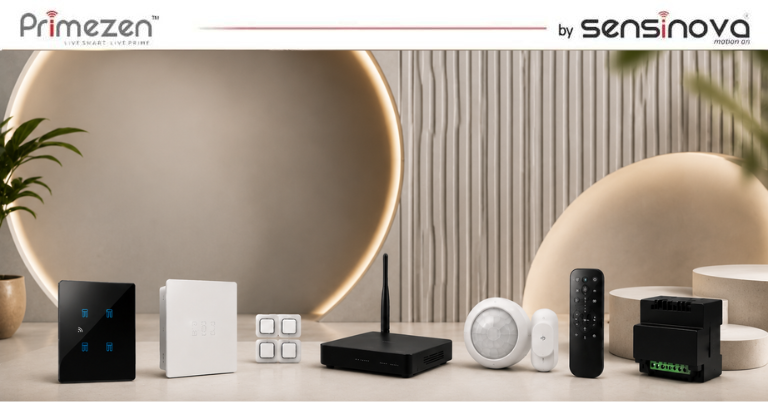
Introduction The number one question every Indian homeowner asks before exploring home automation is simple — how much will it cost me? It is a fair question. For years, home automation was marketed as a premium luxury — something you would find in sprawling penthouses and five-star hotel suites, with price tags to match. That image has stuck in many people’s minds, and it is holding them back from a smart home upgrade they could very comfortably afford today. The truth is, home automation in India has undergone a quiet revolution over the past three to four years. Indian-first brands like Primezen have brought high-quality, reliable smart home products to a price point that works for middle-class families living in standard 1BHK, 2BHK, and 3BHK homes across the country. In this guide, we break down the complete cost of home automation in India — room by room, home type by home type, phase by phase — so you can plan your smart home investment with full clarity and zero surprises. What Determines the Cost of Home Automation in India? Before we get into numbers, it is important to understand what actually drives the cost of a home automation setup. The price varies significantly based on several factors: Size of your home: The number of rooms directly determines how many devices you need. A 1BHK requires far fewer switches, sensors, and cameras than a 3BHK or a villa. Scope of automation: Are you automating only the lighting and switches? Or do you want to include security cameras, smart locks, curtain controllers, and an entertainment system as well? The broader your scope, the higher the investment. Quality and brand of devices: Budget smart devices are available, but they often compromise on reliability, compatibility, and after-sales support. Mid-range Indian brands like Primezen offer the best balance of quality and price for the Indian market. Wired vs wireless system: Wired home automation systems that require structured cabling during construction cost significantly more than modern wireless systems. For most homeowners — whether in an existing flat or a new apartment — wireless is the practical and affordable choice. Installation charges: Professional installation ensures everything is set up correctly and safely. Depending on the complexity of the setup, this is an additional cost to factor in. City and availability of installers: Installation charges can vary between cities. Metro cities like Mumbai and Bangalore tend to have higher labour costs compared to Tier 2 cities like Ahmedabad, Surat, or Indore. Home Automation Cost by Home Type — Overview Here is a high-level view of what a complete home automation setup typically costs across different home sizes in India: Studio / 1RK: ₹8,000 – ₹18,000 Basic smart switches, one gateway, and a smart light or two. A minimal but functional setup. 1BHK Apartment: ₹15,000 – ₹35,000 Smart switches across all rooms, a gateway, motion sensor lighting, and basic smart security. 2BHK Apartment: ₹35,000 – ₹80,000 Comprehensive switch automation, gateway, smart lighting, motion sensors, security camera, and a video doorbell. 3BHK Apartment: ₹80,000 – ₹1,80,000 Full switch and lighting automation across all rooms, gateway, multi-room motion sensing, smart lock, security cameras, IR blaster, and smart plugs. Premium Villa or Independent Bungalow: ₹2,00,000 and above Complete integration including HVAC control, motorised curtains, multi-zone AV system, full perimeter security, smart lighting scenes, and EV charging integration. These are estimates for a complete, well-rounded setup. You can always start smaller and expand over time — which is exactly what most homeowners do. Room-by-Room Cost Breakdown Understanding the cost per room helps you plan your smart home in stages, starting with the spaces that matter most to you. Living Room The living room is the heart of your home and the most impactful place to start your smart home journey. Visitors see it first, you spend the most time here, and it benefits the most from convenience features like scene control and one-tap automation. Smart touch panel switch (6 or 8 module): ₹3,500 – ₹6,500 Smart LED lights or strip lighting: ₹1,500 – ₹4,000 Smart IR blaster (for TV and AC): ₹800 – ₹2,000 Motion sensor: ₹900 – ₹1,800 Smart curtain controller: ₹2,500 – ₹5,500 Estimated Living Room Total: ₹9,000 – ₹20,000 With this setup, you can create a ‘Movie Mode’ that dims the lights, closes the curtains, and switches on the TV — all with a single tap or voice command. Master Bedroom The bedroom is where smart home convenience is felt most personally — dimming lights before sleep, scheduling the fan, automating curtains to open gently in the morning. Smart touch panel switch (4 or 6 module): ₹2,800 – ₹5,500 Smart LED bulb or bedside smart light: ₹800 – ₹2,500 Smart curtain controller: ₹2,500 – ₹5,500 Smart IR blaster (for bedroom AC): ₹800 – ₹2,000 Estimated Master Bedroom Total: ₹7,000 – ₹16,000 A ‘Good Night’ scene that turns off all lights, sets the AC to your sleep temperature, and locks the front door — activated with one tap from your bed — is worth every rupee of this investment. Children’s Room For children’s rooms, the focus is on safety, healthy habits, and energy saving. Smart touch panel switch (2 or 4 module): ₹1,800 – ₹3,500 Smart LED bulb: ₹600 – ₹1,500 Motion sensor: ₹900 – ₹1,800 Estimated Children’s Room Total: ₹3,500 – ₹7,000 Set an automatic lights-off schedule at bedtime. The motion sensor ensures lights come on the moment a child gets up at night — without them needing to find a switch in the dark. Kitchen The kitchen has fewer automation opportunities but smart plugs and switches here deliver genuine daily savings. Smart touch panel switch (2 or 4 module): ₹1,800 – ₹3,500 Smart plug (for geyser or chimney): ₹600 – ₹1,500 Estimated Kitchen Total: ₹2,500 – ₹5,500 Scheduling the kitchen exhaust to run for exactly 30 minutes after cooking, or setting the geyser to switch on automatically before the morning rush, are small automations that make a noticeable difference daily. Bathrooms and Corridors Often overlooked but one of… Continue reading Home Automation Cost in India: Complete Price Guide for 1BHK, 2BHK & 3BHK Homes