Introduction
The way people interact with their homes is changing. For decades, traditional electrical switches have been the standard method of controlling lights, fans, and appliances. They are simple, reliable, and familiar. However, with the growth of smart home technology in India, homeowners are now looking for more intelligent solutions that provide better convenience, automation, and control.
This has created an important question:
Should you choose a smart touch panel or continue using traditional switches for your home?
A smart touch panel offers advanced features such as centralized control, automation scenes, remote access, voice integration, and smart device connectivity. Traditional switches, on the other hand, provide basic manual control without automation capabilities.
For homeowners building new properties, renovating existing homes, or designing luxury interiors, understanding the difference between these two technologies is essential before making an investment.
The demand for smart home automation in India is increasing rapidly due to changing lifestyles, improved technology availability, and growing interest in connected living spaces.
Modern homeowners want homes that are:
- More comfortable
- More secure
- Energy efficient
- Easier to manage
- Future-ready
This is where smart touch panels and smart switch systems are becoming increasingly popular.
What Are Traditional Electrical Switches?
Traditional electrical switches are the conventional switches used in homes for controlling electrical devices manually.
They operate through a simple mechanism where users physically press a button to turn devices ON or OFF.
Common examples include:
- Light switches
- Fan regulators
- Socket switches
- Modular switches
Traditional switches have been used in Indian homes for decades because they are:
- Affordable
- Easy to install
- Simple to operate
- Widely available
However, their functionality is limited because they only provide manual control.
Limitations of Traditional Switches
While traditional switches are reliable, they lack advanced smart features.
Some limitations include:
1. No Automation
Traditional switches cannot automatically control devices based on time, activity, or user preferences.
Example:
A traditional switch cannot automatically turn off lights when nobody is in the room.
2. Multiple Switchboards
Modern homes often have many electrical devices.
This results in:
- Multiple switches
- Complex wiring
- Cluttered walls
Large switchboards can affect interior aesthetics.
3. No Remote Control
Traditional switches cannot be controlled when users are away from home.
For example:
You cannot turn on lights before reaching home.
4. Limited Energy Management
Traditional switches provide no information about electricity usage or automation opportunities.
What Is a Smart Touch Panel?
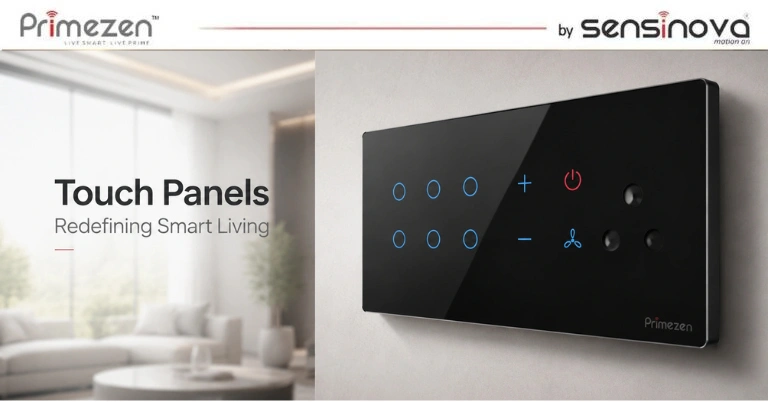
A smart touch panel is an advanced touchscreen control system designed to manage multiple smart home devices from one interface.
Instead of controlling devices individually through separate switches, users can manage their home through a centralized smart panel.
A smart touch panel can control:
- Lights
- Fans
- Curtains
- Air conditioners
- Security systems
- Smart appliances
- Entertainment devices
How Does a Smart Touch Panel Work?
A smart touch panel works as part of a complete home automation ecosystem.
The communication process is:
User Command
↓
Smart Touch Panel
↓
Controller / Gateway
↓
Smart Devices
↓
Action Completed
The panel communicates with connected devices using technologies such as:
- Wi-Fi
- Zigbee
- RF
- Wired automation protocols
Smart Touch Panel vs Traditional Switches: Complete Comparison
Feature | Smart Touch Panel | Traditional Switch |
Control Method | Touchscreen | Manual Button |
Design | Premium Modern Look | Basic Design |
Automation | Yes | No |
Remote Control | Yes | No |
Voice Control | Yes | No |
Smart Scenes | Yes | No |
Energy Management | Available | Limited |
Security Integration | Possible | Not Available |
Multiple Device Control | Yes | No |
Future Expansion | Easy | Limited |
Design and Aesthetic Difference
Traditional Switches
Traditional switches mainly focus on functionality.
Although modern modular switches look better than older designs, they still require multiple switches installed together.
This can create:
- Crowded walls
- More visible wiring
- Limited customization
Smart Touch Panels
Smart touch panels are designed to complement modern interiors.
Benefits include:
- Minimal wall appearance
- Premium touchscreen interface
- Custom layouts
- Luxury appearance
They are especially suitable for:
- Luxury apartments
- Villas
- Smart offices
- Premium interiors
Convenience and User Experience Comparison
The biggest difference between a smart touch panel and traditional switches is the level of convenience they provide.
Traditional switches require users to manually operate each device separately. A smart touch panel creates a connected experience where multiple functions can be controlled from one place.
Traditional Switch Experience
With traditional switches:
- Each device requires separate control
- Users need to manually operate switches
- No automation is possible
- Multiple switchboards are required
For example, entering a living room may require:
- Turning on the lights
- Adjusting the fan
- Closing curtains manually
- Operating entertainment devices separately
Each action requires individual effort.
Smart Touch Panel Experience
A smart touch panel simplifies daily routines.
With one touch, users can control multiple devices together.
Example:
Welcome Home Scene
When you arrive home:
- Entrance lights turn ON
- Living room lights activate
- Curtains open
- Air conditioning starts
Movie Mode
One command can:
- Dim lights
- Close curtains
- Turn on entertainment systems
Night Mode
Before sleeping:
- Selected lights switch OFF
- Security sensors activate
- Bedroom environment adjusts
This level of convenience is one of the biggest reasons homeowners are moving toward smart home automation systems.
Automation Features Comparison
Automation is where smart touch panels have a clear advantage over traditional switches.
Traditional Switches
Traditional switches only perform manual operations.
They cannot:
- Schedule actions
- Create scenes
- Respond automatically
- Communicate with other devices
Smart Touch Panels
Smart touch panels allow homeowners to create intelligent automation routines.
Common automation features include:
1. Scene Control
Users can create customized scenes according to lifestyle needs.
Examples:
Morning Scene
- Lights gradually increase
- Curtains open
- Temperature adjusts
Party Scene
- Decorative lights activate
- Music starts
- Main lighting changes
Vacation Scene
- Security activates
- Selected lights operate automatically
2. Scheduling
Smart touch panels can automate devices based on time.
Examples:
- Outdoor lights turn ON at sunset
- Bedroom lights switch OFF at midnight
- Curtains open every morning
This reduces manual effort.
3. Remote Access
Many smart home systems allow users to control devices through smartphones.
Examples:
- Turn lights ON before reaching home
- Check security status while travelling
- Control appliances remotely
4. Voice Control Integration
Smart touch panels can integrate with voice assistants.
Users can control devices through commands like:
“Turn on the bedroom lights.”
“Activate movie mode.”
“Switch off all lights.”
This makes smart homes more accessible and user-friendly.
Energy Efficiency Comparison
Energy saving is becoming an important factor for Indian homeowners due to rising electricity costs.
Traditional Switches and Energy Usage
Traditional switches depend completely on human operation.
Common problems:
- Lights left ON unnecessarily
- Fans running in empty rooms
- No scheduling
- No automatic control
Energy management depends entirely on user discipline.
Smart Touch Panels and Energy Management
Smart touch panels improve efficiency through intelligent control.
Benefits include:
Automated Lighting
Lights can turn OFF automatically when rooms are unused.
Brightness Adjustment
Smart lighting systems can adjust brightness according to requirements.
Scheduling
Devices can operate only when needed.
Sensor Integration
Motion and occupancy sensors can automate device control.
Example:
If nobody is present in a room:
→ Lights automatically switch OFF.
Security Benefits Comparison
Home security is another area where smart touch panels provide additional value.
Traditional Switch Security
Traditional switches cannot connect with security devices.
They cannot:
- Monitor activity
- Activate security modes
- Communicate with sensors
Smart Touch Panel Security Integration
A smart touch panel can become part of a complete security ecosystem.
It can connect with:
- Door sensors
- Motion sensors
- Smart locks
- Cameras
- Alarm systems
Example: Leaving Home
With one command:
“Away Mode”
The system can:
✓ Turn OFF unnecessary lights
✓ Activate sensors
✓ Lock connected devices
✓ Start security monitoring
Installation Comparison
Traditional Switch Installation
Traditional switches are simple to install.
Requirements:
- Electrical wiring
- Switchboard installation
- Basic electrician setup
They are suitable for homes requiring only manual control.
Smart Touch Panel Installation
Smart automation requires more planning.
The process includes:
Step 1: Home Assessment
Experts analyze:
- Electrical layout
- Automation requirements
- Device selection
Step 2: System Design
A customized automation plan is created.
It includes:
- Number of touch panels
- Controllers
- Sensors
- Connected devices
Step 3: Installation
The smart devices are installed and connected.
Step 4: Configuration
Automation scenes and controls are programmed according to user preferences.
Step 5: Testing
The complete system is tested to ensure reliable operation.
Cost Comparison: Smart Touch Panel vs Traditional Switches
Cost is one of the first questions homeowners consider.
Traditional Switch Cost
Traditional switches are affordable because they provide basic functionality.
Advantages:
- Lower initial investment
- Simple replacement
- Easy availability
However, they do not provide automation features.
Smart Touch Panel Cost
Smart touch panel systems require a higher initial investment because they include:
- Advanced hardware
- Controllers
- Sensors
- Programming
- Installation
However, they provide additional value through:
- Convenience
- Energy management
- Security
- Future expansion
Long-Term Value Comparison
Factor | Traditional Switch | Smart Touch Panel |
Initial Cost | Lower | Higher |
Features | Basic | Advanced |
Automation | No | Yes |
Energy Saving | Limited | Better |
Design Value | Standard | Premium |
Future Ready | No | Yes |
Security Integration | No | Yes |
Which Option Is Better for New Homes in India?
For homeowners building new properties, smart touch panels provide significant advantages.
During new construction, automation can be planned properly with:
- Smart wiring
- Controllers
- Sensors
- Network planning
This creates a smoother installation experience.
Smart touch panels are especially recommended for:
- Luxury villas
- Premium apartments
- Smart residences
- Modern interior projects
Which Option Is Better for Existing Homes?
Existing homes can also adopt smart automation solutions.
Depending on the electrical setup, homeowners can choose:
- Wireless smart switches
- Retrofit automation
- Smart panels
- Controller-based solutions
Professional assessment helps identify the best approach.
Why Smart Touch Panels Are Becoming Popular in India
The Indian housing market is changing.
Homeowners are increasingly interested in:
- Modern interiors
- Connected devices
- Energy efficiency
- Better security
- Lifestyle automation
Several factors are driving smart home adoption:
1. Growth of Smart Homes
New residential projects are increasingly offering automation as a premium feature.
2. Increasing Technology Awareness
Consumers are becoming familiar with:
- IoT devices
- Smart appliances
- Voice assistants
- Connected systems
3. Demand for Luxury Living
Premium homeowners want technology that matches modern lifestyles.
4. Better Accessibility
Smart home products are becoming more affordable and easier to install.
Final Comparison Summary
If your requirement is only basic ON/OFF control, traditional switches remain a practical choice.
However, if you want:
✓ Modern design
✓ Smart automation
✓ Energy efficiency
✓ Security integration
✓ Voice control
✓ Future-ready living
then a smart touch panel is the better choice for modern Indian homes.
Why Choose Primezen Smart Home Solutions?
Choosing between a smart touch panel and traditional switches is not only about technology. It is about selecting a solution that improves your lifestyle, enhances comfort, and prepares your home for the future.
A successful smart home requires reliable products, proper planning, and expert guidance.
Primezen provides complete smart home automation solutions designed for modern Indian homes, combining smart touch panels, wireless switches, controllers, sensors, and security solutions into one connected ecosystem.
Our goal is to simplify everyday living by creating intelligent spaces that are comfortable, secure, and efficient.
Complete Smart Home Automation Ecosystem
A smart home is not created by a single device. It requires multiple technologies working together.
Primezen solutions help integrate:
- Smart Touch Panels
- Wireless Smart Switches
- Smart Controllers
- Lighting Automation
- Security Systems
- Sensors
- Smart Appliances
This complete ecosystem allows homeowners to control and automate different aspects of their property from a single interface.
Designed for Indian Homes
Every home has different requirements based on:
- Property size
- Lifestyle
- Interior design
- Electrical infrastructure
- Automation needs
Primezen smart home solutions are designed for:
- Apartments
- Villas
- Independent houses
- Offices
- Commercial spaces
- Premium residential projects
Whether you are constructing a new property or upgrading an existing home, automation solutions can be customized according to your requirements.
Premium Design Meets Advanced Technology
Modern homeowners want technology that blends naturally with their interiors.
Smart touch panels from Primezen provide:
- Elegant touchscreen interfaces
- Minimal wall design
- Premium appearance
- Easy device control
- Smart automation features
Unlike traditional switches that only provide basic functionality, smart panels become a stylish and functional part of modern interior design.
Expert Support From Planning to Installation
A smart home project requires more than purchasing devices.
Primezen helps customers through every stage:
Requirement Analysis
Understanding your lifestyle and automation requirements.
System Planning
Designing the right combination of:
- Touch panels
- Controllers
- Sensors
- Smart switches
Installation Support
Ensuring proper setup and configuration.
User Guidance
Helping homeowners understand and operate their smart home system.
Frequently Asked Questions
1. What is the difference between a smart touch panel and a traditional switch?
A traditional switch provides basic manual control of electrical devices, while a smart touch panel offers advanced automation features. Smart touch panels allow users to control multiple devices, create scenes, schedule actions, integrate security systems, and operate devices remotely.
2. Are smart touch panels worth the investment for Indian homes?
Yes, smart touch panels are becoming a valuable investment for modern Indian homes because they provide convenience, better design, energy management, and future-ready automation features. They are especially beneficial for homeowners building luxury apartments, villas, and smart residences.
3. Can I replace my existing switches with smart touch panels?
Yes, smart automation can be installed in existing homes depending on the electrical setup. A professional assessment helps determine whether wired automation, wireless switches, or retrofit solutions are the best option.
4. Do smart touch panels save electricity?
Smart touch panels can improve energy efficiency by allowing automation of lighting and appliances. Features such as scheduling, sensor integration, and automatic switching help reduce unnecessary energy consumption.
5. Can smart touch panels control lights and fans?
Yes. Smart touch panels can control various devices including:
- Lights
- Fans
- Curtains
- Appliances
- Security devices
The exact capability depends on the automation system and connected devices.
Conclusion
The comparison between smart touch panels vs traditional switches clearly shows how home technology is evolving.
Traditional switches continue to provide basic functionality and affordability. However, modern homeowners increasingly expect more from their living spaces.
A smart touch panel offers:
✓ Centralized control
✓ Premium interior design
✓ Automation features
✓ Energy management
✓ Security integration
✓ Future-ready technology
For homeowners who want convenience, comfort, and a smarter lifestyle, smart touch panels provide a significant advantage over traditional switches.
As smart home automation continues to grow in India, connected solutions will become an essential part of modern residential and commercial spaces.
With innovative products and complete automation solutions, Primezen helps transform ordinary homes into intelligent living environments.