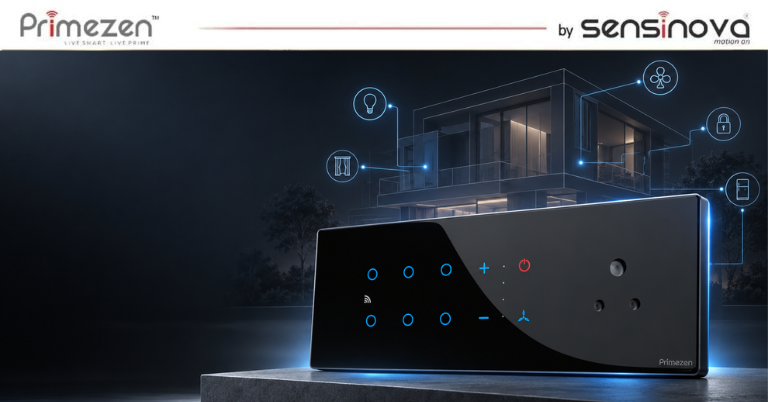
Smart homes are no longer limited to smart bulbs, voice assistants and smartphone apps. Today, homeowners are looking for a more convenient way to control lights, fans and other electrical devices directly from the switchboard.
This is where smart switches have become an important part of modern home automation.
But there is one problem.
Different smart-home brands often use different platforms and technologies. A switch that works with one ecosystem may not offer the same compatibility with another.
Matter is designed to make smart-home devices work more easily across different platforms.
For Indian homeowners planning a new smart home or upgrading an existing one, understanding Matter-compatible smart switches can help avoid compatibility problems and unnecessary upgrades later.
What Is a Matter Smart Switch?
A Matter smart switch is a smart electrical switch that supports the Matter smart-home standard.
Matter is an industry standard developed to improve interoperability between compatible smart-home devices. It is designed to allow devices from different manufacturers and ecosystems to communicate more easily.
The Connectivity Standards Alliance describes Matter as an industry-unifying standard focused on simplicity, interoperability and reliable connectivity.
In simple terms:
Instead of asking, “Which brand’s ecosystem does this switch work with?” you can also ask, “Is this switch Matter compatible?”
That makes Matter an important consideration when choosing smart switches for a modern home.
Why Are Matter Smart Switches Becoming Important?
The biggest advantage of Matter is interoperability.
Imagine a home where you have:
- Smart lights
- Smart switches
- Motion sensors
- Smart plugs
- Smart speakers
- Smart curtains
- Security devices
If every product requires a different app or ecosystem, managing the home can become complicated.
Matter is designed to reduce this fragmentation by providing a common standard for compatible devices.
Major smart-home platforms already support Matter, and the ecosystem continues to expand. For example, TP-Link’s India product listing includes Matter-certified smart switches and other smart-home devices.
This means homeowners can increasingly build smart-home systems without depending entirely on a single manufacturer’s ecosystem.
How Do Matter Smart Switches Work?
Matter itself is not a replacement for Wi-Fi or other wireless technologies.
It is a communication standard that works with technologies such as Wi-Fi, Thread and Ethernet, while Bluetooth Low Energy can be used during device setup.
A typical setup can involve:
Smart Switch → Wi-Fi / Thread → Matter Controller → Smart Home Platform
Depending on the product and ecosystem, the controller may be part of a smart speaker, hub or another compatible device.
Once the switch is added to the smart-home ecosystem, users can control compatible devices and create automation routines.
For example:
One tap → Living room lights ON
or
Motion detected → Corridor lights ON
or
Good Night scene → Bedroom lights OFF + selected devices OFF
The exact features depend on the switch and the smart-home platform being used.
What Are the Benefits of Matter-Compatible Smart Switches?
1. Better Ecosystem Compatibility
One of the biggest reasons to consider Matter is compatibility.
Matter is designed to allow compatible products from different manufacturers to work together more easily instead of forcing homeowners into completely isolated ecosystems.
This is particularly useful if you already use products from different smart-home brands.
2. Easier Smart Home Expansion
You don’t necessarily have to automate your entire home at once.
You can start with:
- Living room lights
- Bedroom switches
- Smart fans
- Entrance lighting
and gradually expand the system.
A compatible smart switch can become part of a larger home automation setup as your requirements grow.
3. More Convenient Lighting Control
Smart switches can make everyday lighting control easier.
Instead of manually operating multiple switches, homeowners can create scenes or routines based on their requirements.
For example:
Movie Mode
Living room lights → Dimmed
Curtain → Closed
Entertainment system → ON
Good Morning
Bedroom lights → ON
Curtains → Open
Away Mode
Selected lights → OFF
Security devices → Activated
The actual automation possibilities depend on the devices and platform being used.
4. Local Connectivity Can Improve Responsiveness
Matter is designed with reliable local connectivity as part of its goals.
However, homeowners should not assume that every Matter product automatically works offline or without any hub.
The actual experience depends on the product’s connectivity method, controller and ecosystem.
That is an important point to check before buying.
Matter vs Wi-Fi Smart Switches: What’s the Difference?
This is where many buyers get confused.
Wi-Fi and Matter are not exactly competing technologies.
Wi-Fi is a networking technology.
Matter is a smart-home application standard that can operate over technologies including Wi-Fi and Thread.
So a product can potentially be:
Wi-Fi + Matter compatible
rather than simply being “Wi-Fi or Matter.”
This distinction is important when comparing smart switches.
What Should Indian Homeowners Check Before Buying a Matter Smart Switch?
Matter compatibility is useful, but don’t buy a switch simply because you see the Matter logo.
Check these factors first.
1. Check the Exact Model
Matter support should be verified for the specific model and version you are buying.
Don’t assume that every product in a brand’s smart-switch range supports Matter.
Matter certification exists specifically for compatible products, so buyers should verify the product details before purchasing.
2. Check Wiring Requirements
This is particularly important in Indian homes.
Some smart switches require a neutral wire, while others are designed to work without one.
Older homes may have different wiring configurations compared with newly constructed homes.
Before purchasing a smart switch, check:
- Neutral wire availability
- Switchboard depth
- Modular plate compatibility
- Load requirements
- Electrician requirements
This can prevent installation problems later.
3. Check Switch Size and Design
Smart functionality isn’t the only consideration.
The switch should also fit the existing electrical setup and match the interior design.
Modern homes increasingly use:
- Minimal switchboards
- Glass or premium finishes
- Touch controls
- Modular designs
- Multi-function panels
A smart switch should ideally combine technology with good design.
4. Check Supported Smart-Home Platforms
Don’t assume that “Matter compatible” means every feature works identically across every platform.
Check compatibility with the ecosystem you already use.
For example:
- Apple Home
- Google Home
- Amazon Alexa
- Samsung SmartThings
Support and available features can vary by device and platform.
Are Matter Smart Switches Better Than Traditional Switches?
For a basic home where you only need manual ON/OFF control, a traditional switch may still be perfectly adequate.
But a smart switch becomes more useful when you want:
- Remote control
- Automation
- Scenes
- Scheduling
- Multi-device control
- Smart-home integration
So the question isn’t simply:
“Are smart switches better?”
The better question is:
“Do you need smart control and automation in your home?”
If the answer is yes, investing in the right smart switching system can make sense.
Matter Smart Switches vs Touch Panels
This is another important distinction for homeowners.
A smart switch generally focuses on controlling a particular electrical circuit or device.
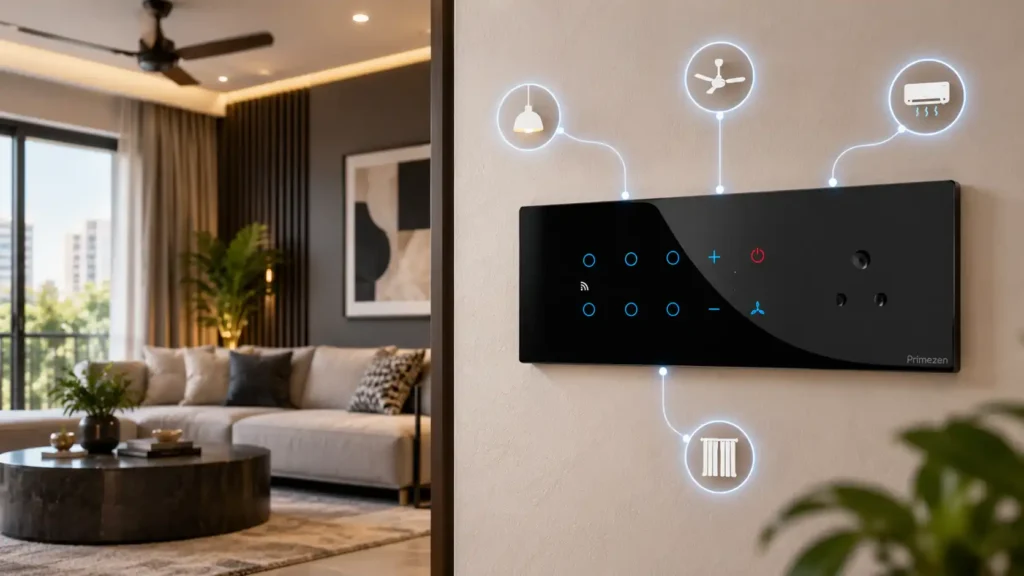
A touch panel can provide a more centralized interface for controlling multiple functions.
For example, a touch panel may allow users to access:
- Multiple lighting zones
- Scenes
- Curtains
- Fans
- Air conditioning
- Home automation functions
The right choice depends on the size of the home and the level of automation required.
For a simple requirement, individual smart switches may be enough.
For a premium automated home, a combination of smart switches and touch panels can provide a more integrated experience.
Are Matter Smart Switches Worth It for Indian Homes?
They can be — but don’t choose a smart switch purely because Matter is trending.
The better approach is to look at the complete system.
Consider:
Wiring → Switch design → Connectivity → Platform compatibility → Automation requirements → Future expansion
Matter can make interoperability easier, but the quality of the actual switch, installation and overall automation system still matters.
The Matter standard itself continues to evolve. In June 2026, the Connectivity Standards Alliance released Matter 1.6, with improvements focused on setup, multi-ecosystem experiences and context-driven control.
That makes compatibility standards increasingly relevant for homeowners planning long-term smart-home installations.
Final Thoughts
Smart-home technology is moving beyond simply controlling lights from a smartphone.
Today’s homeowners want systems that are easy to use, compatible with multiple platforms and flexible enough to expand over time.
Matter-compatible smart switches are one part of that evolution.
However, Matter should be considered as one factor in the buying decision, not the only one.
Before choosing a smart switch, check its wiring requirements, compatibility, installation requirements, supported platforms and future expansion possibilities.
For homeowners building a modern smart home, combining smart switches, touch panels and automation can create a cleaner and more convenient way to control everyday electrical systems.
Looking for modern smart switching solutions?
Explore Primezen’s range of smart switches and touch panels designed for modern residential interiors and home automation requirements.