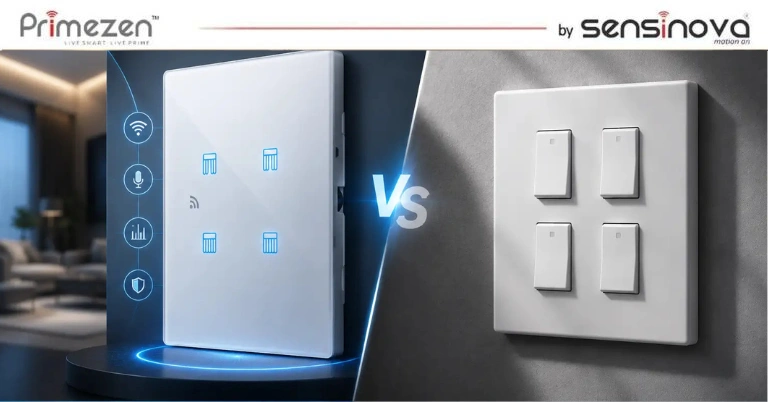
Introduction You are renovating your home or shifting into a new flat. The electrician has come to finalise the switchboard layout and casually mentions — do you want regular switches or those fancy touch panels? You have seen smart switches at a friend’s place, or perhaps in a showroom. They look premium. But a small voice in the back of your head asks — is it really worth spending five to ten times more on a switch? It is a completely valid question. And it deserves an honest, detailed answer — not a sales pitch. In this blog, we put smart switches and normal switches side by side across every dimension that matters to an Indian homeowner — design, functionality, cost, energy efficiency, convenience, safety, and long-term value. By the end of this article, you will know exactly which one is right for your home and your lifestyle. What is a Normal Modular Switch? A normal modular switch is the standard electrical switch that has been used in Indian homes for decades. You physically press or toggle it to turn a device on or off. That is the full extent of its functionality. Brands like Legrand, Havells, Anchor, GM, and Schneider Electric dominate this space in India. Normal modular switches are available in a wide range of prices — from budget options at ₹30 to ₹50 per switch point to premium modular systems that can cost ₹300 to ₹800 per module depending on the brand and finish. They are reliable, straightforward, and universally available. Every electrician in India knows how to install and repair them. They require no internet, no app, no configuration. You press it — it works. For decades, this was all a home switch needed to do. But the way we live has changed significantly, and the expectations we have of our homes have changed with it. What is a Smart Switch? A smart switch is an advanced electrical switch that does everything a normal switch does — and considerably more. It can be controlled by touch on the panel itself, remotely through a smartphone app from anywhere in the world, through voice commands via Google Assistant or Amazon Alexa, or automatically through pre-set schedules and triggers. Smart switches connect to your home Wi-Fi network or to a home automation hub like the Primezen Zen Gateway. Once connected, they become part of a unified smart home ecosystem where devices can communicate, automate, and work together intelligently. Primezen’s touch panel switches represent one of the best smart switch options available in India today. They feature a premium glass finish, capacitive touch controls, and are available in 2, 4, 6, and 8 module configurations — fitting standard Indian gang box sizes without any rewiring in most cases. They look like something from a luxury hotel, but they are designed and priced for real Indian homes. Design and Aesthetics — The First Difference You Notice Walk into a room with Primezen touch panel switches on the walls and the visual impact is immediate. The sleek, flat glass panel with subtle backlit touch icons is a world apart from the raised plastic toggles of a conventional modular switch. Normal modular switches, even premium ones, have a functional, utilitarian look. They were designed to serve a purpose — not to enhance the visual appeal of a room. They work perfectly well but contribute nothing to the ambience or character of your interior. Smart touch panel switches, on the other hand, are a design statement. They complement contemporary Indian interior design — whether minimalist, modern, or luxe. Interior designers and architects across India are increasingly specifying smart touch panels as a standard finish element in premium residential projects. If you are spending lakhs on your home’s flooring, furniture, and kitchen fittings, the switches on your walls deserve the same attention to detail. Functionality — Where the Real Gap Becomes Clear This is where the comparison becomes genuinely one-sided. A normal switch has exactly one function — manually turning a device on or off. Nothing more, nothing less. A smart switch offers: Remote control: Turn any device on or off from anywhere in the world using your smartphone. Left home and unsure if the geyser is on? Check the app and switch it off in seconds. Voice control: Ask Google Assistant or Amazon Alexa to switch off the bedroom light, turn on the hall fan, or dim the living room lights — without moving from your sofa or bed. Scheduling: Set your bathroom geyser to switch on automatically at 6:30 AM every morning. Schedule the living room lights to turn on at sunset and off at midnight. Once set, it happens every day without any input from you. Scene control: Create one-tap scenes that control multiple devices simultaneously. A ‘Good Night’ scene can turn off every light in the house, switch off the hall fan, set the bedroom AC to sleep mode, and lock the front door — all with a single tap on your phone or a voice command. Usage history: Know exactly how long each device has been running. Track your energy consumption patterns and identify which appliances are costing you the most electricity each month. Child lock: Lock specific switch points so children cannot accidentally operate dangerous appliances like geysers or outdoor electrical points. A normal switch does none of these things. Not even one. Cost Comparison — The Full Picture This is where most people stop comparing and go back to the normal switch. The upfront cost difference is real and it deserves honest discussion. Normal modular switch (per module): ₹30 – ₹300 Smart touch panel switch (per panel): ₹1,800 – ₹6,500 depending on the number of modules For a 2BHK home with roughly 10 to 14 switch panels, the cost difference could be anywhere between ₹25,000 and ₹60,000. That is a significant number. But before you make a decision based on upfront cost alone, consider the complete financial picture. Electricity savings: Smart scheduling and automation eliminate the habit… Continue reading Smart Switch vs Normal Switch: Which One Is Actually Worth Installing in Your Home?
Category: Blog
Home Automation Cost in India: Complete Price Guide for 1BHK, 2BHK & 3BHK Homes
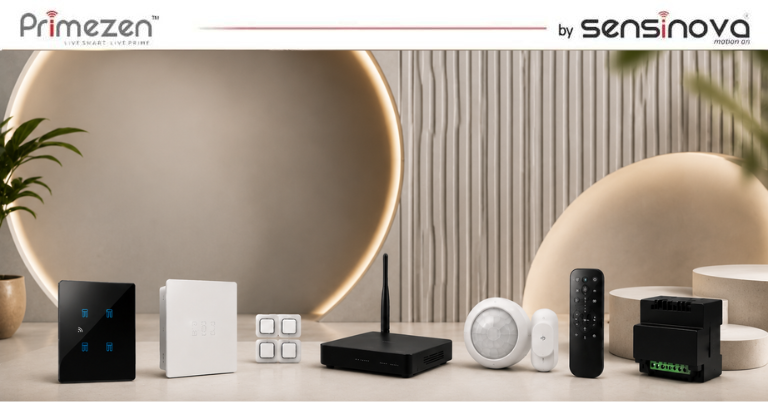
Introduction The number one question every Indian homeowner asks before exploring home automation is simple — how much will it cost me? It is a fair question. For years, home automation was marketed as a premium luxury — something you would find in sprawling penthouses and five-star hotel suites, with price tags to match. That image has stuck in many people’s minds, and it is holding them back from a smart home upgrade they could very comfortably afford today. The truth is, home automation in India has undergone a quiet revolution over the past three to four years. Indian-first brands like Primezen have brought high-quality, reliable smart home products to a price point that works for middle-class families living in standard 1BHK, 2BHK, and 3BHK homes across the country. In this guide, we break down the complete cost of home automation in India — room by room, home type by home type, phase by phase — so you can plan your smart home investment with full clarity and zero surprises. What Determines the Cost of Home Automation in India? Before we get into numbers, it is important to understand what actually drives the cost of a home automation setup. The price varies significantly based on several factors: Size of your home: The number of rooms directly determines how many devices you need. A 1BHK requires far fewer switches, sensors, and cameras than a 3BHK or a villa. Scope of automation: Are you automating only the lighting and switches? Or do you want to include security cameras, smart locks, curtain controllers, and an entertainment system as well? The broader your scope, the higher the investment. Quality and brand of devices: Budget smart devices are available, but they often compromise on reliability, compatibility, and after-sales support. Mid-range Indian brands like Primezen offer the best balance of quality and price for the Indian market. Wired vs wireless system: Wired home automation systems that require structured cabling during construction cost significantly more than modern wireless systems. For most homeowners — whether in an existing flat or a new apartment — wireless is the practical and affordable choice. Installation charges: Professional installation ensures everything is set up correctly and safely. Depending on the complexity of the setup, this is an additional cost to factor in. City and availability of installers: Installation charges can vary between cities. Metro cities like Mumbai and Bangalore tend to have higher labour costs compared to Tier 2 cities like Ahmedabad, Surat, or Indore. Home Automation Cost by Home Type — Overview Here is a high-level view of what a complete home automation setup typically costs across different home sizes in India: Studio / 1RK: ₹8,000 – ₹18,000 Basic smart switches, one gateway, and a smart light or two. A minimal but functional setup. 1BHK Apartment: ₹15,000 – ₹35,000 Smart switches across all rooms, a gateway, motion sensor lighting, and basic smart security. 2BHK Apartment: ₹35,000 – ₹80,000 Comprehensive switch automation, gateway, smart lighting, motion sensors, security camera, and a video doorbell. 3BHK Apartment: ₹80,000 – ₹1,80,000 Full switch and lighting automation across all rooms, gateway, multi-room motion sensing, smart lock, security cameras, IR blaster, and smart plugs. Premium Villa or Independent Bungalow: ₹2,00,000 and above Complete integration including HVAC control, motorised curtains, multi-zone AV system, full perimeter security, smart lighting scenes, and EV charging integration. These are estimates for a complete, well-rounded setup. You can always start smaller and expand over time — which is exactly what most homeowners do. Room-by-Room Cost Breakdown Understanding the cost per room helps you plan your smart home in stages, starting with the spaces that matter most to you. Living Room The living room is the heart of your home and the most impactful place to start your smart home journey. Visitors see it first, you spend the most time here, and it benefits the most from convenience features like scene control and one-tap automation. Smart touch panel switch (6 or 8 module): ₹3,500 – ₹6,500 Smart LED lights or strip lighting: ₹1,500 – ₹4,000 Smart IR blaster (for TV and AC): ₹800 – ₹2,000 Motion sensor: ₹900 – ₹1,800 Smart curtain controller: ₹2,500 – ₹5,500 Estimated Living Room Total: ₹9,000 – ₹20,000 With this setup, you can create a ‘Movie Mode’ that dims the lights, closes the curtains, and switches on the TV — all with a single tap or voice command. Master Bedroom The bedroom is where smart home convenience is felt most personally — dimming lights before sleep, scheduling the fan, automating curtains to open gently in the morning. Smart touch panel switch (4 or 6 module): ₹2,800 – ₹5,500 Smart LED bulb or bedside smart light: ₹800 – ₹2,500 Smart curtain controller: ₹2,500 – ₹5,500 Smart IR blaster (for bedroom AC): ₹800 – ₹2,000 Estimated Master Bedroom Total: ₹7,000 – ₹16,000 A ‘Good Night’ scene that turns off all lights, sets the AC to your sleep temperature, and locks the front door — activated with one tap from your bed — is worth every rupee of this investment. Children’s Room For children’s rooms, the focus is on safety, healthy habits, and energy saving. Smart touch panel switch (2 or 4 module): ₹1,800 – ₹3,500 Smart LED bulb: ₹600 – ₹1,500 Motion sensor: ₹900 – ₹1,800 Estimated Children’s Room Total: ₹3,500 – ₹7,000 Set an automatic lights-off schedule at bedtime. The motion sensor ensures lights come on the moment a child gets up at night — without them needing to find a switch in the dark. Kitchen The kitchen has fewer automation opportunities but smart plugs and switches here deliver genuine daily savings. Smart touch panel switch (2 or 4 module): ₹1,800 – ₹3,500 Smart plug (for geyser or chimney): ₹600 – ₹1,500 Estimated Kitchen Total: ₹2,500 – ₹5,500 Scheduling the kitchen exhaust to run for exactly 30 minutes after cooking, or setting the geyser to switch on automatically before the morning rush, are small automations that make a noticeable difference daily. Bathrooms and Corridors Often overlooked but one of… Continue reading Home Automation Cost in India: Complete Price Guide for 1BHK, 2BHK & 3BHK Homes
Best Smart Home Devices in India: Top 10 Must-Have Products for a Fully Automated Home
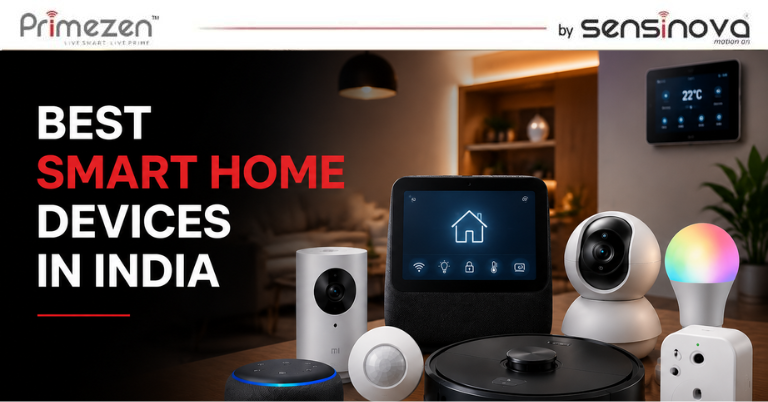
Introduction Walk into any premium apartment showroom in India today and you will notice something different — the switches on the walls are no longer plastic toggles. They are sleek glass panels. The lights dim automatically as you enter a room. The front door unlocks as the homeowner walks up to it. None of this requires manual effort. Smart home devices are no longer showroom novelties. They are practical, affordable, and available for every Indian home — whether you live in a 1BHK apartment in Ahmedabad, a 3BHK flat in Pune, or an independent bungalow in Hyderabad. But here is the challenge — the market is flooded with options. Hundreds of products, dozens of brands, and a confusing mix of imported gadgets that may not even be compatible with Indian wiring or voltage standards. How do you know what is actually worth buying? In this guide, we have done the hard work for you. These are the top 10 best smart home devices in India — selected based on practicality, compatibility with Indian homes, ease of installation, and genuine everyday value. Whether you are starting your smart home journey today or expanding an existing setup, this list has everything you need. What to Consider Before Buying Smart Home Devices in India Before jumping into the list, keep these selection criteria in mind — they will save you from expensive mistakes: Indian electrical compatibility: Your devices must work on 220–240V, 50Hz — the Indian standard. Many imported devices are built for 110V and require additional adapters or simply do not work reliably. Works with or without internet: A smart home device that stops working every time your ISP has downtime is a frustration, not a convenience. Always prefer devices that support local control. Ecosystem compatibility: Choose devices that work together within the same platform. A mix of incompatible brands creates a fragmented experience — multiple apps, no cross-device automation, no unified control. Ease of installation: Devices that require major rewiring or civil work are not practical for most Indian homes. Look for products that fit existing gang boxes and standard wiring. After-sales support in India: Imported brands rarely have local service centres. Always choose brands with a support network in India. Top 10 Best Smart Home Devices in India 1. Smart Touch Panel Switch — The Most Impactful Upgrade for Any Indian Home If there is one device that transforms the look and feel of your home more than anything else, it is the smart touch panel switch. It replaces your existing plastic modular switch with a sleek, glass-finish panel that looks like it belongs in a luxury hotel. But beyond aesthetics, smart switches give you remote control, scheduling, and voice control over every device in your home — lights, fans, exhaust, geysers, and more. You can turn off all the lights in your home with a single tap, set schedules so the hall light turns on at 7 PM every evening, or ask Google Assistant to switch off the bedroom fan without getting out of bed. Primezen’s touch panel switches are available in 2, 4, 6, and 8 module options. They are designed specifically for Indian gang box sizes, require no neutral wire in most configurations, and fit directly over existing wiring — making installation clean and straightforward. Best for: Every room in the house. Living room, bedroom, kitchen, and entrance. 2. Home Automation Gateway — The Brain of Your Smart Home A gateway or hub is not the most exciting device to talk about, but it is the most important one in your entire setup. Without a reliable hub, your smart devices work in silos — each controlled separately, unable to communicate or automate together. The Primezen Zen Gateway connects all your Primezen devices into one unified system. You control everything from a single app. You create scenes and automations that span multiple rooms. And crucially, the Zen Gateway supports local control — all device communication happens within your home network, so your smart home continues working perfectly even when the internet is down. This is a feature most Indian homeowners overlook when buying smart devices — and regret later. Best for: Anyone setting up more than two or three smart devices. Install this first. 3. Motion Sensor Lights — Practical, Energy-Saving, and Effortless Motion sensor lights are one of the simplest and most rewarding smart home upgrades you can make. The concept is straightforward — the sensor detects movement and switches the light on automatically. When the room is empty for a set duration, the light switches off on its own. No more lights left on in empty bathrooms. No more fumbling for the switch in a dark corridor at night. No more telling children to switch the lights off when they leave a room. In a typical Indian home, motion sensor lights in bathrooms, corridors, storerooms, and staircases can reduce electricity consumption from lighting by 30 to 40 percent. Best for: Bathrooms, corridors, staircases, utility areas, children’s rooms. 4. Smart Security Camera — 24/7 Peace of Mind Smart cameras have become one of the fastest-growing home automation categories in India — and for good reason. With a smart camera installed at your entrance, living area, or compound, you have real-time visibility into your home from anywhere in the world. Modern smart cameras offer features like night vision, two-way audio (speak through the camera to someone at home), motion-triggered alerts, and cloud or local storage of footage. Some models offer AI-based person detection that filters out false alerts from pets or moving curtains. For Indian families where one or both parents work outside the home, smart cameras provide genuine peace of mind — knowing the children arrived safely from school, the domestic help arrived on time, or whether the delivery was left at the door. Best for: Main entrance, living room, compound or parking area. 5. Smart Video Doorbell — Know Who is at Your Door, Always The smart video… Continue reading Best Smart Home Devices in India: Top 10 Must-Have Products for a Fully Automated Home
What is Home Automation? A Complete Guide for Indian Homeowners
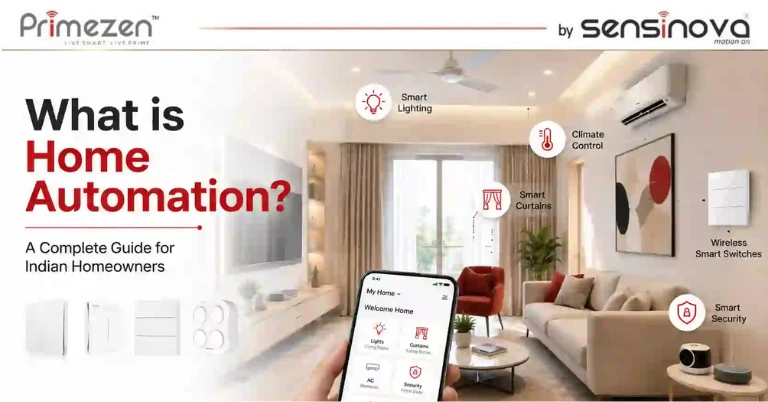
Imagine coming home after a long day at work. Before you even open the front door, your home already knows you are back. The lights in the hallway switch on, the air conditioner starts cooling the room to your preferred temperature, and your favourite music begins to play softly in the background. You did not press a single button. Your home simply did it for you. This is not a scene from a science fiction film. This is home automation — and it is happening in thousands of Indian homes right now, in cities like Ahmedabad, Bangalore, Mumbai, Pune, Hyderabad, and Delhi. Over the past few years, home automation has gone from being a luxury concept reserved for ultra-premium bungalows to an accessible, affordable upgrade for everyday Indian apartments and independent homes. Thanks to Indian-first brands like Primezen, building a smart home no longer requires breaking the bank or calling a team of engineers to rewire your entire house. In this complete guide, we will walk you through everything you need to know about home automation in India — what it is, how it works, what devices are involved, the real benefits, common misconceptions, and exactly how you can get started. What Exactly is Home Automation? Home automation refers to the use of technology to control, monitor, and automate the devices and systems inside your home — without you having to physically interact with them every single time. It connects your appliances, lighting, security systems, entertainment, and even your doors and windows to a central platform, allowing them to communicate with each other and respond to commands intelligently. In simple terms, home automation makes your home smarter. Instead of walking to a switch to turn off the fan, you say ‘turn off the fan’ and it switches off. Instead of waking up to manually close the curtains every morning, a schedule does it automatically at sunrise. Instead of worrying whether you left the AC on after leaving home, you check your phone and turn it off remotely. The concept is also referred to as a smart home system or home automation system. At a broader level, home automation is a part of the Internet of Things (IoT) — a technology framework where everyday physical objects are connected to the internet and can send and receive data. How Does Home Automation Work? Every home automation system is built around three core elements: devices, a hub or gateway, and a control interface. Understanding how these three work together will help you visualise exactly what a smart home looks like in practice. 1. Smart Devices These are the individual products installed in your home — smart switches, smart lights, motion sensors, smart locks, cameras, smart plugs, and so on. Each device is capable of connecting to a network and receiving commands. 2. The Hub or Gateway The hub is the brain of the entire system. It acts as the central controller that all your smart devices connect to. When you give a command — whether through an app, a voice assistant, or an automated schedule — the hub receives that command and sends the appropriate signal to the relevant device. Primezen’s Zen Gateway is a prime example of a smart home hub built specifically for Indian homes. It connects all Primezen devices on a single local network, enabling both remote control and fully offline local control — meaning your smart home keeps working even when the internet is down. 3. The Control Interface This is how you interact with your smart home. Control interfaces include: Smartphone apps (Android and iOS) — control everything from anywhere in the world Voice assistants like Amazon Alexa or Google Assistant — use simple voice commands Smart touch panels on your walls — manually control devices with a sleek glass-finish switch Automated rules and schedules — set routines so your home runs itself Communication Protocols Used in Home Automation Smart devices in a home automation system communicate using wireless protocols. The most common ones used in India are: Wi-Fi — the most widely used; good range but consumes more power Zigbee — low-power mesh network ideal for large homes with many devices Z-Wave — similar to Zigbee, commonly used in security systems Bluetooth — short-range, best for devices used nearby like speakers and locks Primezen devices primarily use a combination of Wi-Fi and proprietary mesh protocols, ensuring stable and reliable connectivity throughout your home. Key Devices in a Home Automation System A home automation system can include as few or as many devices as you like. Here is an overview of the most popular and practical devices available in India today: Smart Lighting Smart lighting allows you to control the brightness, colour, and on/off state of your lights remotely or automatically. You can dim the lights for movie nights, set them to wake you up gradually in the morning, or create different ‘scenes’ for different moods. Smart lights can be scheduled, voice-controlled, and integrated with motion sensors so they turn on only when someone is in the room — saving considerable electricity. Smart Switches and Touch Panel Switches Smart switches are one of the most impactful and cost-effective upgrades in any Indian home. They replace your existing modular switches and give you remote control, scheduling, and voice control over any device connected to that switch — fans, lights, geysers, and more. Primezen offers some of India’s best touch panel switches — available in 2, 4, 6, and 8 module configurations with a premium glass finish. They fit standard Indian gang boxes without the need for rewiring, making them an ideal first step into home automation for most homeowners. Home Automation Gateway As explained earlier, the gateway or hub is what ties your entire smart home together. Without a reliable gateway, individual smart devices work in isolation. A gateway like the Primezen Zen Gateway… Continue reading What is Home Automation? A Complete Guide for Indian Homeowners
What Is a Home Automation Gateway & Why Does Your Smart Home Need One? — Primezen Zen Gateway Explained
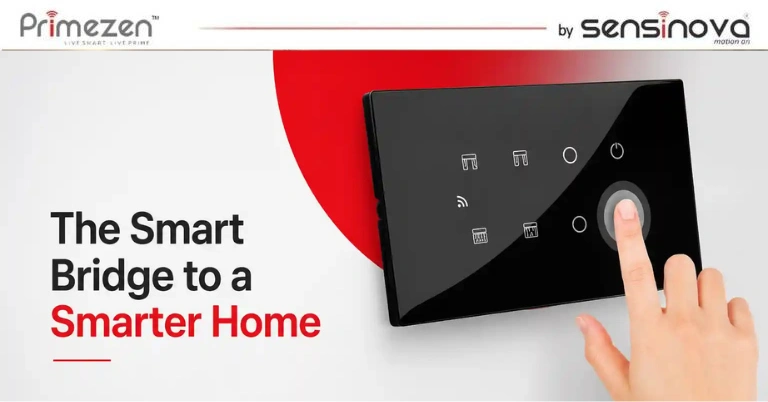
Introduction You have a phone. You have smart lights. You have a smart fan controller. Maybe a smart door lock and a motion sensor. But each of these devices works in its own app, on its own protocol, and managing them individually defeats the point of having a smart home in the first place. This is the problem that a home automation gateway solves. A gateway is the central intelligence of a smart home — the device that connects all your individual smart components into a unified, coordinated system that can be controlled from a single app, programmed with scenes and schedules, and operated intelligently without you having to think about it. This guide explains exactly what Primezen’s Zen Gateway does, why it is the essential component for any serious smart home in India, and how it transforms a collection of individual smart devices into a genuinely smart home. What Is a Home Automation Gateway? A home automation gateway (also called a smart home hub or controller) is a central device that: Communicates with all your smart home devices using RF (radio frequency), WiFi, Zigbee, or a combination of protocols Translates between different protocols so devices from different brands and technologies can work together Executes automation rules, scenes, and schedules — coordinating multiple devices to act together Provides a single interface (smartphone app or wall panel) for controlling the entire system Connects to the internet for remote control from anywhere in the world Enables voice control integration with Google Assistant, Amazon Alexa, etc. Without a gateway, each smart device is an island — controlled separately, unable to coordinate with other devices, and requiring multiple apps. With a gateway, your home becomes a truly coordinated smart environment. What Is the Primezen Zen Gateway? The Primezen Zen Gateway is Primezen’s purpose-built home automation gateway for Indian homes and businesses — designed to work with Primezen’s complete range of smart home products including: Zen Touch Panel switches (2, 4, 6, 8 modules) Zen Wireless Switch Motion sensors (Zen-10WW, IRIS-12W) Fan regulators Curtain and blind controllers Door and gate automation Scene controllers The Zen Gateway communicates via RF (Radio Frequency) with Primezen devices — a robust, reliable protocol ideal for Indian homes where WiFi signal quality can be variable, and where the practical range needed across a typical Indian bungalow or apartment is 10–50 metres. What Can You Do With the Zen Gateway? 1. Single App Control Control every light, fan, curtain, and connected device in your home from a single Primezen smartphone app. No more switching between multiple apps for different devices. 2. Scene Setting — One Button, Perfect Ambience A scene is a pre-programmed state for multiple devices simultaneously. Example scenes: “Good Morning” Scene: All bedroom lights gradually brighten to 60%, fan speeds up, curtains open, living room lamp switches on. “Movie Mode” Scene: Living room main lights off, cove lights dimmed to 20%, AC set to 22°C, curtains closed. “Away Mode” Scene: All lights off, fans off, AC off, front door lock activated, motion sensors to security mode. “Good Night” Scene: All lights off except bedroom reading light at 30%, bedroom fan on speed 2, main door lock activated. These scenes can be activated with a single tap on the app, a voice command, or a dedicated scene controller button. 3. Schedules and Timers Program any device to operate on a schedule: Lights on at sunset, off at 11 PM Geyser on at 6:30 AM, off at 7:30 AM Garden lights on from 7 PM to 6 AM 4. Automation Rules (If-Then Logic) Create intelligent automations: IF motion detected at entrance gate → THEN entrance light on + send phone notification IF main door locked → THEN all lights off + AC off (leaving home automation) IF time is after sunset AND motion detected on staircase → THEN staircase light on for 3 minutes 5. Voice Control Integration The Zen Gateway integrates with Google Home and Amazon Alexa — allowing voice commands: “Hey Google, good night” → activates your Good Night scene “Alexa, turn on the living room lights” “Hey Google, set the bedroom fan to speed 2” 6. Remote Control From Anywhere Internet connectivity allows full control of your home from anywhere — switch on lights while at the office, check if the AC is running, turn off the geyser from your phone. 7. Energy Monitoring (Selected Devices) Monitor energy consumption of connected devices to identify and reduce unnecessary usage. Why RF Is Better Than WiFi for Home Automation in India Most consumer smart home products use WiFi directly. While this works for individual devices, it creates problems in a whole-home system: Factor RF (Zen Gateway System) Direct WiFi Range 30–100m through walls 10–20m line of sight Power consumption Extremely low (RF devices) Higher (WiFi always active) Reliability High (dedicated protocol) Depends on WiFi network stability Router load Single gateway connection Each device on router Interference Low High (crowded 2.4GHz band) Installation complexity Simple pairing WiFi setup for each device Network dependence Local control even without internet Often needs internet In Indian homes — where WiFi signals can be attenuated by thick RCC walls, where 2.4GHz interference from neighbours is common, and where internet reliability varies — RF-based systems provide noticeably better reliability and range than direct WiFi smart devices. Setting Up the Primezen Zen Gateway What You Need Primezen Zen Gateway device Primezen smart home devices (touch panels, wireless switches, sensors) Smartphone with Primezen app installed Broadband WiFi connection (for remote access and voice control) Installation Overview Place the Zen Gateway centrally in your home (maximises RF coverage) Connect to power and your home WiFi via the Primezen app Pair each smart home device with the gateway (each device has a simple pairing mode) Organise devices by room in the app Create scenes and automation rules Optionally connect Google Home or Amazon Alexa Installation typically takes 1–3 hours for a medium-sized home with 20–40 smart devices, and is best performed by a Primezen-trained installer. Zen Gateway vs Alternatives:… Continue reading What Is a Home Automation Gateway & Why Does Your Smart Home Need One? — Primezen Zen Gateway Explained
Motion Sensor Lights for Home: How They Work, Where to Install & Why Every Indian Home Needs One in 2026
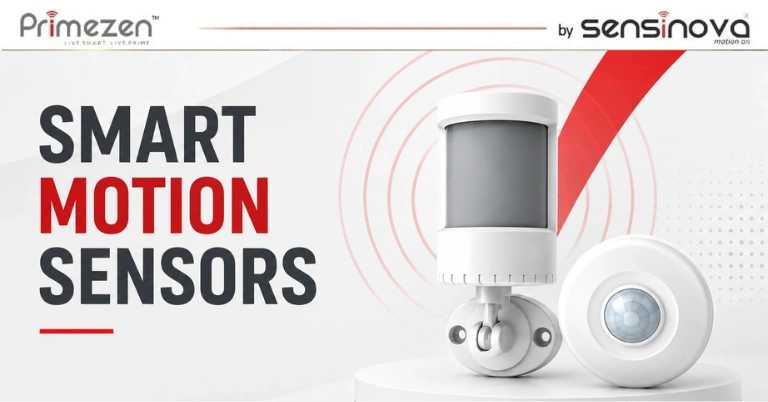
Introduction Imagine walking into your home at night — hands full, keys fumbling — and the entrance light turns on automatically the moment you step inside. No fumbling for a switch. No stumbling in the dark. No wasted electricity because someone forgot to turn the light off. This is the practical everyday magic of a motion sensor light — and in 2026, it is rapidly becoming standard in India’s thoughtfully designed homes rather than an unusual feature. Primezen’s range of motion sensor switches and integrated sensor lights brings this intelligent functionality to Indian homes, apartments, offices, and commercial spaces across Vadodara and Gujarat. How Motion Sensor Lights Work: The Technology The most common technology in residential motion sensor lights is PIR (Passive Infrared) sensing. PIR Sensor Technology A Passive Infrared (PIR) sensor detects infrared radiation (heat) emitted by human bodies. When a person enters the sensor’s detection zone, the PIR element detects the change in infrared patterns as the warm body moves across its field of view — triggering the light. “Passive” means the sensor does not emit anything — it only detects naturally emitted infrared radiation. Key PIR specifications for residential use: Detection range: Typically 5–12 metres for residential sensors Detection angle: 90°–120° (wide angle) covers most room entry scenarios Sensitivity adjustment: Most sensors allow fine-tuning of sensitivity to reduce false triggers from pets Time delay: Adjustable hold-on time after last motion detected (typically 10 seconds to 10 minutes) Daylight sensor: Many PIR sensors include an ambient light (lux) sensor — activating only in darkness, preventing unnecessary triggering during the day Microwave / Ultrasonic Sensors (Less Common in Residential) Active sensors that emit microwaves or ultrasound and detect reflections. More sensitive than PIR — detect through walls and detect stationary presence. Better for commercial security applications; PIR is more appropriate for residential home automation. Where to Install Motion Sensor Lights in Your Indian Home The right placement transforms motion sensors from a novelty to a daily convenience. Here are the best locations: 1. Main Entrance / Door Why: Hands-free activation when arriving home (especially with shopping, luggage). Automatic light-on for safety when entering after dark. Auto-off after you have moved inside — no wasted electricity. Recommended sensor: PIR switch in ceiling or wall bracket; 10–30 second time delay. 2. Staircase Why: One of the highest-value installations. Staircase accidents at night — particularly for elderly family members and children — are largely preventable with automatic staircase lighting. Recommended sensor: PIR at the top AND bottom of stairs, controlling the same staircase light circuit; 1–2 minute time delay. 3. Corridor / Hallway Why: Corridors in Indian homes and apartments are often the most-traversed spaces at night — bathroom trips, children moving around. Motion-activated corridor lighting eliminates the need to find and operate switches in the dark. Recommended sensor: Ceiling PIR with wide detection angle covering the full corridor length; 1 minute time delay. 4. Bathroom (Night Light Circuit) Why: A separate night-light circuit with PIR activation means the bathroom light comes on automatically for nighttime visits — no switch fumbling, no disrupting a partner with sudden full-brightness lights. Recommended sensor: Low-sensitivity PIR (to avoid triggering for movement outside the bathroom); 2–3 minute time delay; connected to a warm, low-intensity night-light circuit rather than main bathroom illumination. 5. Garage / Parking Area Why: Arriving home in a car, the garage light activates automatically. No dark fumbling. Security deterrent for any unwanted visitors. Recommended sensor: PIR with 5-minute time delay; weatherproof if the area is semi-exposed. 6. Store Room / Utility Room Why: Store rooms are used briefly and infrequently — and lights are frequently left on by mistake. Motion sensors in store rooms eliminate this entirely. Recommended sensor: PIR with 2-minute time delay. 7. Children’s Room (Night Mode) Why: Children’s bathroom visits at night. A low-level night light with motion activation provides safety guidance without fully waking the child. 8. Terrace / Balcony Why: Evening use of outdoor spaces — lights activate when you step out, deactivate when you go inside. Also acts as a security deterrent. Energy Savings from Motion Sensor Lights This is one of the most compelling practical benefits in Indian homes where certain lights are frequently left on: Calculation Example: Corridor Light Standard corridor light: 10W LED bulb Typical Indian household: Light ON 8–10 hours/day (often left on after nighttime use) With motion sensor: Light ON 30–60 minutes/day (only when needed) Annual electricity saving: 8.5 hours × 365 days × 10W = 31 kWh/year per corridor light At DGVCL tariff of ₹6.50/unit: ₹200/year savings per corridor light Multiply across staircase, store room, bathroom, and garage — motion sensors across a typical Indian home save ₹1,000–₹3,000 annually in electricity costs. Primezen’s Motion Sensor Products Primezen Zen-10WW (PIR Motion Sensor Switch) Integrated PIR sensor in a compact wall-mount switch format Works with existing light fittings Adjustable sensitivity, time delay, and ambient light threshold Easy to install in standard switchboard cutout Suitable for corridors, store rooms, bathrooms Primezen IRIS-12W (Integrated PIR Sensor Light) Complete luminaire with integrated PIR sensor No separate switch required — sensor and light in one unit Ideal for garage, parking, entrance, terrace 12W output suitable for typical residential spaces Weather-resistant design for semi-outdoor use Integration with Primezen Smart Home System Both Primezen motion sensors are compatible with the Primezen Zen Gateway for full smart home integration — triggering scenes, notifications, and automations based on motion detection in addition to simple light control. Frequently Asked Questions Q1. Will a motion sensor light keep switching on and off? With proper sensitivity and time delay settings, no. The time delay keeps the light on for your chosen duration after last detected motion — preventing rapid switching. Sensitivity adjustment prevents false triggers from fans, curtains, or pets. Q2. Do motion sensors work with LED lights? Yes — Primezen’s motion sensor switches are fully compatible with LED lights, including very low-wattage LEDs. Specify LED compatibility when selecting the sensor to avoid any minimum load issues. Q3. Can I override a motion… Continue reading Motion Sensor Lights for Home: How They Work, Where to Install & Why Every Indian Home Needs One in 2026
How to Choose the Right Touch Panel Module for Every Room: 2, 4, 6, or 8 Module – Primezen Complete Guide
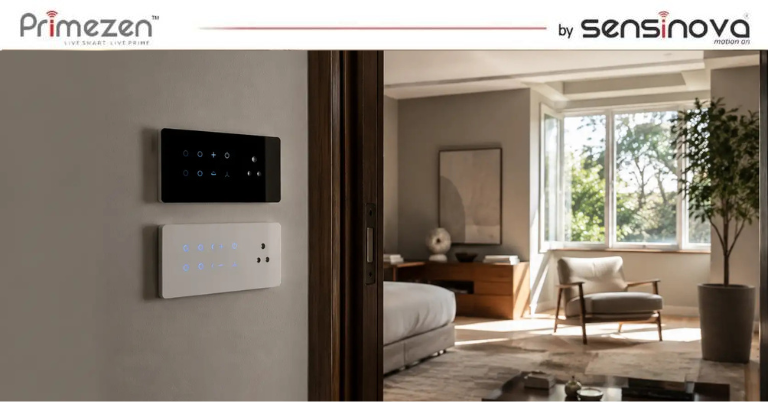
Introduction You have decided on touch panel switches. You have chosen Primezen. Now comes the practical question that every homeowner, interior designer, and electrician faces: how many modules do you need for each room? Get it wrong and you either end up with multiple panels on one wall (cluttered), or a single panel without enough switching points for all your loads (inconvenient). Get it right and every room has a clean, perfectly functional touch panel that controls everything it needs to — elegantly. This is Primezen’s complete room-by-room module selection guide for Indian homes. Understanding Modules: What Each Module Controls A “module” in a touch panel switch is one switching point — one on/off (or dimmer) control for one electrical circuit. Examples: 1 module = controls 1 light circuit OR 1 fan OR 1 socket A 4-module panel = 4 individual switching points on one glass panel An 8-module panel = 8 switching points — controls a full room’s electrical circuits from one panel Common module types available in Primezen’s Zen Touch Panel range: Standard on/off switch module Fan regulator module (speed control) Dimmer module (for dimmable lights) 2-way/3-way switch module (for staircase/corridor) Bell/call module USB charging module 5A socket module Room-by-Room Module Selection Guide Living Room / Drawing Room Typical electrical loads: Main ceiling light or chandelier Cove/ambient lighting (1–2 circuits) Ceiling fan (1–2 fans) AC point (if separate switch) Wall light or reading light Power socket for entertainment system Recommended module count: 6–8 modules A living room is where you want the most control and the most impressive aesthetics. An 8-module Primezen Zen panel covering all lights, fans, and mood lighting gives the room a single, elegant control point. Suggested configuration (8-module): Main light | Cove lights 1 | Cove lights 2 | Reading light | Fan 1 | Fan 2 | AC | Entertainment socket Master Bedroom Typical loads: Main ceiling light Bedside ambient/reading light (1 or 2 circuits) Ceiling fan AC (if switched at panel) Dressing area light USB charging or socket Recommended module count: 4–6 modules The master bedroom benefits from a 4 or 6-module panel at the door, with a 2-module panel at each bedside for light and fan control without getting up. Suggested configuration (6-module door panel): Main light | Reading light | Fan | Dressing light | AC | Socket Bedside panel (2-module per side): Bedside light | Fan Children’s Bedroom Typical loads: Main ceiling light Study table light Fan Power socket Recommended module count: 4 modules Children’s rooms are simpler — a 4-module panel handles the typical requirements cleanly. Suggested configuration: Main light | Study light | Fan | Socket/USB Guest Bedroom Typical loads: Main ceiling light Bedside light Fan AC Kitchen Typical loads: Main kitchen light Under-cabinet task light Exhaust fan Geyser/water heater Chimney (if separate switch) Recommended module count: 4–6 modules Important note for kitchens: Avoid touch panels directly above cooking areas where steam, grease, and heat are concentrated. Place the panel on a side wall away from the hob. Flat glass surface makes kitchen panels easy to wipe clean — one of touch panels’ best practical features. Bathroom / Washroom Typical loads: Main light Exhaust fan Geyser / water heater Recommended module count: 2–4 modules A 2-module panel typically suffices for a standard bathroom (light + exhaust fan), with a 4-module panel for bathrooms with a geyser or additional circuits. Important: Ensure touch panels in or near wet areas comply with appropriate IP ratings for humidity resistance. Pooja Room / Prayer Room Typical loads: Main light Decorative lights (1–2 circuits) Bell Recommended module count: 2–4 modules Dining Room Typical loads: Main dining light Pendant / mood light (dimmer preferred) Fan Recommended module count: 4 modules (include a dimmer for ambient dining atmosphere) Home Office / Study Room Typical loads: Main ceiling light Task/desk lamp circuit Fan Computer/printer socket Recommended module count: 4 modules Garage / Utility Room Typical loads: Main light Power socket Recommended module count: 2 modules (Modular switches are also acceptable in utility/garage areas — touch panels may not add aesthetic value here) Corridor / Staircase Typical loads: Staircase lights (2-way switching — on from both levels) Night light (if separate) Recommended module count: 2-module panel at each level with 2-way switch configuration Summary Guide: Module Count by Room Room Minimum Modules Recommended Maximum (Full Feature) Living Room 4 6 8 Master Bedroom (door panel) 4 6 8 Bedside panels (per side) 1 2 2 Children’s Bedroom 2 4 4 Guest Bedroom 2 4 4 Kitchen 3 4 6 Bathroom 2 2 4 Dining Room 2 4 4 Home Office 2 4 4 Pooja Room 2 2 4 Corridor/Staircase 2 per level 2 per level 2 per level Planning Tips for Touch Panel Module Selection Tip 1: Think in Rooms, Not Switches Don’t think about individual switches — think about all the electrical circuits in the room and how you want to group them on a single panel or across multiple panels. Tip 2: Plan for Future Circuits Leave one or two extra modules on your panel for future additions — an extra light, a USB charging point, or smart home control. Adding a circuit later is much easier when the panel already has an empty slot. Tip 3: Use Primezen’s Smart Integration If you plan to add smart home control, each module in a Primezen Zen Touch Panel can be paired with an RF receiver — allowing phone app control, scene setting, and automation without replacing the panel. Tip 4: High-Load Circuits For high-load circuits (geysers above 2 kW, ACs, ovens), ensure your touch panel module and wiring are rated for the load. Primezen’s technical team can advise on appropriate module selection for high-load circuits. Tip 5: Consult During Construction The best time to plan your touch panel module layout is during the electrical rough-in phase of construction — when conduit and wiring positions are being finalised. Changing module counts post-construction is expensive. Frequently Asked Questions Q1. Can I mix different module types in… Continue reading How to Choose the Right Touch Panel Module for Every Room: 2, 4, 6, or 8 Module – Primezen Complete Guide
Touch Panel Switch vs Modular Switch: Which One Is Right for Your Indian Home in 2026?
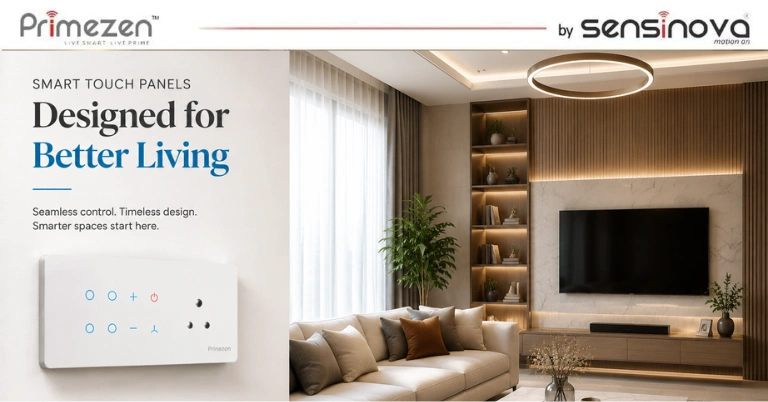
Introduction Walk into any newly finished home in Vadodara, Ahmedabad, or across Gujarat in 2026, and you will notice something different about the walls. Where once you had the familiar raised plastic buttons of a modular switch, there are now sleek, flat, glass-fronted touch panel switches – illuminated softly, flush with the wall, responding to the lightest fingertip tap. If you are renovating, building a new home, or simply upgrading your electrical fittings, the question is inevitable: Should I go with touch panel switches or stick with modular switches? The answer depends on your priorities — budget, aesthetics, smart home plans, and practical lifestyle needs. This complete comparison guide from Primezen will help you decide. What Are Modular Switches? Modular switches are the traditional standard in Indian homes. They consist of individual electrical components (switches, sockets, dimmers, fans) that clip into a mounting frame on a flush-mounted backbox in the wall. The defining characteristic of modular switches is their physical actuation — you press a raised button that physically moves a contact inside the switch to complete or break the circuit. Popular modular switch brands in India: Anchor, Havells Reo, Legrand Myrius, Schneider Opale, Wipro North West, GM Modular Key features of modular switches: Mechanical on/off operation Individual components are replaced easily Wide range of configurations Works on standard 2-wire or 3-wire circuit No external power required beyond the switched circuit itself Robust mechanical reliability Price: ₹100–₹600 per module depending on brand and type What Are Touch Panel Switches? Touch panel switches are electronic switching devices with a glass or acrylic panel surface. Instead of pressing a physical button, you touch a capacitive or resistive sensor on the panel face. Inside, a microelectronics module senses the touch and controls a relay or semiconductor switch that completes or breaks the circuit. Primezen’s Zen Touch Panel range offers 2, 4, 6, and 8-module configurations — covering everything from a single light circuit to an entire room’s electrical control on one elegant panel. Key features of touch panel switches: Capacitive touch operation — no physical button movement Tempered glass face — elegant, easy to clean LED indicator lights — easily visible in the dark Available in 2, 4, 6, 8 module configurations Can be wired into standard circuits (neutral required for most touch panels) Optional wireless RF integration No battery required (mains powered) Price: ₹800–₹4,000 per panel depending on modules Touch Panel Switch vs Modular Switch: Feature-by-Feature Comparison Feature Touch Panel Switch Modular Switch Operation Capacitive touch (fingertip) Mechanical press Aesthetics Premium — glass, flush, minimal Functional — plastic, raised buttons Durability High (no moving parts) High (robust mechanical contacts) Indicators Built-in LED glow Optional separate indicator Dark visibility Excellent (LED glow lines) Limited Cleaning Very easy — flat glass surface Dust collects around button edges Wiring compatibility Needs neutral wire in most cases Standard 2-wire compatible Fault repair Replace full panel Replace individual module Smart home upgrade Easy RF/WiFi integration Requires additional smart devices Cost ₹800–₹4,000 per panel ₹300–₹2,500 per board Child safety Sensitive touch — accidental activation possible Requires deliberate press Power cut indicator Useful — dark glass without LED Normal appearance Where Touch Panel Switches Win 1. Aesthetics and Interior Design For premium homes, apartments with modern interiors, or any space where the electrical fittings contribute to the overall design, touch panels are unmatched. The flat glass surface, minimal profile, and soft LED glow create an effect that no modular switch can replicate. In a modern minimalist living room, an 8-module Primezen Zen Touch Panel controlling all the room’s lights and fans looks like an integrated design element — not an afterthought. 2. Hygiene and Ease of Cleaning Touch panels have a completely flat, smooth glass surface. Cleaning is a single wipe. Modular switches have button edges, gaps, and recesses where dust, grease, and bacteria accumulate. For kitchens, hospitals, clinics, and homes with hygiene priorities — touch panels are far superior. 3. Durability of the Surface Because there are no moving parts — no button that physically depresses with every use — touch panel surfaces have theoretically unlimited actuation life. The glass face is resistant to scratching, staining, and wear. 4. Smart Home Integration Primezen’s touch panels are designed for seamless integration with RF-based home automation. Adding wireless control, scene setting, or integration with the Primezen Zen Gateway for full smart home operation is straightforward when the base switches are touch panels. 5. Night Visibility The LED glow line on touch panel switches makes them instantly visible in a dark room without turning on any light — a practical advantage that homeowners consistently appreciate. Where Modular Switches Win 1. Cost for Large Properties For a large home with 50+ switch points, the cost difference between touch panels and quality modular switches can be significant. Modular switches from premium brands are also good quality products — the cost saving with modular is real and relevant. 2. Simple Circuit Compatibility Many older homes and some new constructions do not have a neutral wire available at switch points. Touch panels typically require a neutral wire for their electronics. Modular switches work on standard 2-wire circuits without modification. 3. Individual Module Replacement If one module in a modular board develops a fault, you replace only that module. With a touch panel, a fault often means replacing the full panel (though panels are not particularly expensive). 4. Familiar Operation for Elderly Family Members Older family members accustomed to tactile feedback from a mechanical switch sometimes find touch panels counterintuitive initially. For households with elderly residents, this transition may require an adjustment period. The Verdict: Which Should You Choose for Your Indian Home? Choose touch panel switches if: You are building a new home or doing a complete renovation (neutral wires are easiest to add during construction) Aesthetics and premium finish are a priority You want smart home compatibility from the start You value hygiene and easy cleaning Your home is a premium apartment, villa, or show home Choose modular switches if:… Continue reading Touch Panel Switch vs Modular Switch: Which One Is Right for Your Indian Home in 2026?
Touch Switches for Home: How to Upgrade Every Room Without Breaking Walls
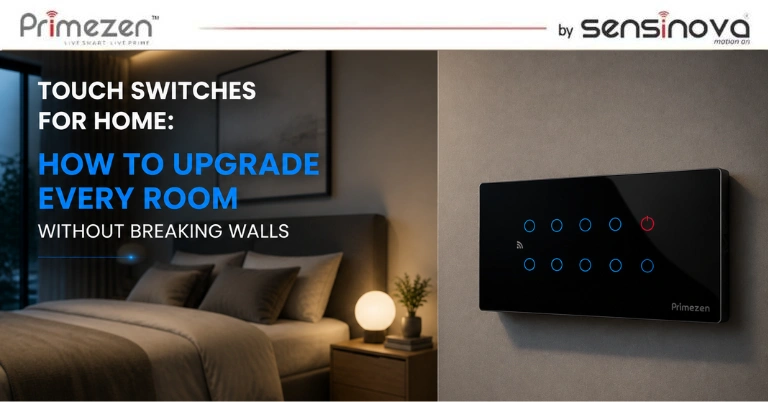
Introduction Most Indian homeowners want to upgrade their home’s switches. They have seen the sleek glass panels in showrooms, admired them in a friend’s newly renovated flat, and quietly wished their own home looked and felt that modern. But one question stops them every time: “Will I have to break my walls for this?” It is the single biggest barrier to smart home adoption in India — the fear of construction, drilling, expensive rewiring, and weeks of disruption. And for most touch switches for home, the honest answer used to be: yes, probably. Not anymore. In 2025, Primezen’s Zen Touch Panels install inside your existing switchboards without a single nail in the wall, without rewiring, and without any civil work whatsoever. A certified installer can upgrade your entire 2BHK in a single day — and every room looks and works completely differently by the time they leave. This is your complete room-by-room guide to upgrading every space in your Indian home with touch switches — what to install, how it works, and why Primezen is the right choice for homes in Vadodara and across India. Why “No Wall-Breaking” Is the Key Advantage for Indian Homes Indian homes — whether they are 5-year-old apartments in Vadodara’s Gotri, 20-year-old bungalows in Alkapuri, or rented flats across any city — share a common feature: they were built without smart home wiring. Adding conventional wired smart systems would require: Cutting channels (chasing) in walls to lay new conduits Running new wire from switch points to central controllers Plastering, painting, and tiling affected areas after installation Weeks of disruption to daily life Civil work costs running into lakhs Primezen’s Zen Touch Panels bypass all of this. Designed to fit inside the standard Indian modular electrical boxes already in your walls, the existing wiring connects directly to the panel — no new cables, no channels, no damage to walls, tiles, or paintwork. Result: a professional smart home upgrade completed in hours, not weeks. What You Need Before You Start Almost nothing beyond what you already have: Existing switchboards — Primezen panels fit standard Indian modular boxes A Wi-Fi router — basic home broadband is sufficient The Primezen Gateway — pairs with up to 50 devices, connecting all panels and switches through RF and Wi-Fi. See the Primezen home automation system for full details A certified Primezen installer — handles everything from panel fitting to app setup to scene configuration No rewiring kit. No civil contractors. No plasterers. Room-by-Room Guide: Touch Switches for Every Space Living Room — The Showpiece of Your Smart Home The living room is where touch switches for home make the most dramatic impact. Most electrical points in the house converge here — lights, fan, AC, curtains, entertainment systems. Recommended panel: ZEN 802 or ZEN 805 (8-module Zen Touch Panel) Controls: Ceiling and accent lights Fan with digital speed control (no separate regulator needed) Curtain control — open/close motorised curtains from panel or phone AC integration Master switch — turns everything off with one tap 6A plug socket Smart Scenes: Scene What Happens Movie Night Lights at 20%, curtains close, fan on speed 2 Good Morning Curtains open, lights full, fan on Away Mode All off, one lamp on schedule to simulate presence Good Night Everything off with one tap from the sofa Installation time: 2–3 hours | Wall breaking: None Master Bedroom – Total Control From Bed Recommended panels: ZEN 404 (4-module) at room entry + ZEN 202 (2-module) at bedside The entry panel manages lights, fan speed, geyser (16A), and curtains. The bedside panel gives instant light and master-off control without getting up. Smart Scenes: Scene What Happens Wake Up Lights gradually brighten, curtains open at alarm time Sleep Mode Lights off, fan on speed 1, AC set to 24°C Reading Bedside light on, ceiling off, fan on low Good Night Everything off — one tap, no getting up The child lock feature locks the 16A geyser switch to prevent accidental operation by young children. Installation time: 1–2 hours | Wall breaking: None Children’s Bedroom – Safety Meets Daily Convenience Recommended panel: ZEN 404 (4-module) Key setups: Child lock on all 16A and high-load circuits Nightlight automation — lights auto-dim to 10% at bedtime for a gentle transition to sleep Motion trigger (with Primezen motion sensor) — lights activate when a child gets up at night, no fumbling in the dark App monitoring — check from anywhere if the room light has been left on Voice control — older children can say “Hey Google, turn off my light” independently Installation time: 1–2 hours | Wall breaking: None Kitchen – Hands-Free Control Where You Need It Most Recommended panel: ZEN 404 (4-module) near the kitchen entrance Cooking means occupied hands — voice control and scheduled automation make the kitchen genuinely hands-free. Key setups: Main kitchen and under-counter task lights Exhaust fan on a daily timer — automatically runs 6:30–7:30 PM during dinner cooking, then switches off Chimney and heavy appliances on the 16A switch Kitchen light auto-off after 11 PM if no motion detected (with motion sensor) Voice commands through Alexa or Google — “turn on the kitchen light” without touching anything Installation time: 1–2 hours | Wall breaking: None Bathroom – Automate the Details That Matter Recommended panel: ZEN 202 (2-module) Often overlooked, bathrooms offer some of the most practical daily automations: Geyser on schedule — turns on automatically 20 minutes before your usual shower time. Hot water ready. Auto-off after your bathing window. Saves significant electricity every month. Exhaust fan timer — runs 15 minutes after bathroom use, maintains air quality automatically Bathroom light schedule or motion trigger — never left on overnight again Installation time: 1 hour | Wall breaking: None Study / Home Office — Your Perfect Work Environment on Demand Recommended panel: ZEN 404 (4-module) With work-from-home now a permanent reality for many Indian professionals, the study deserves a proper smart upgrade. Smart Scenes: Scene What Happens Focus Mode Lights at 100%, fan on medium, AC… Continue reading Touch Switches for Home: How to Upgrade Every Room Without Breaking Walls
Touch Panel Switch for Home: The Complete Buying Guide for Indian Homes
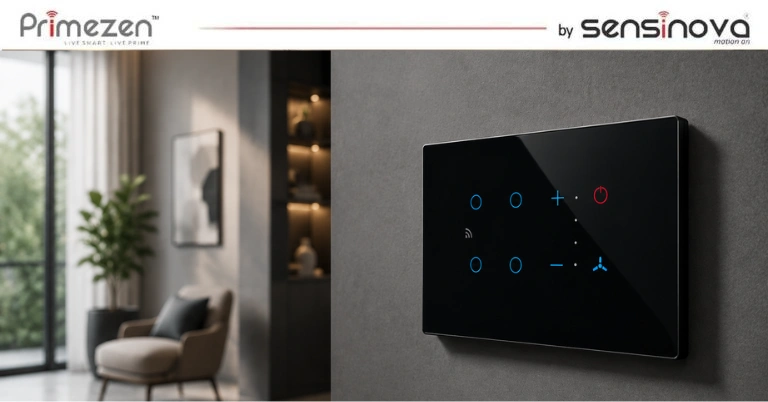
Introduction You have made the decision: it is time to upgrade your home’s switches. The old plastic toggles have served their purpose, but in 2025, they feel as out of place in a modern Indian home as a rotary dial phone. You have seen touch panel switches in showrooms, in newly constructed flats, in your colleague’s recently renovated apartment — and you want to know exactly what you are buying before you invest. This is the guide that answers every question you have. What is a touch panel switch? What types exist? What features matter? What does it cost in India? And — if you are in Vadodara specifically — who provides the best touch panel switch for home in your city? By the end of this guide, you will know exactly what to look for, what to avoid, and why thousands of homeowners across India — from Vadodara to Bengaluru, from Mumbai to Delhi — are choosing Primezen’s Zen Touch Panels as the foundation of their home automation system. What Is a Touch Panel Switch? A touch panel switch is a smart replacement for the conventional mechanical switches fitted in Indian homes. Instead of physically pressing or flicking a lever, you simply tap a smooth, sleek surface — made of tempered glass or acrylic — to control your lights, fans, and appliances. But a modern touch panel switch is far more than just a stylish upgrade. It is the entry point to a complete home automation system that connects your entire home through a single app, responds to voice commands, runs on automated schedules, and can be controlled remotely from anywhere in the world. Unlike basic “dumb” touch switches that only replace the mechanical action, a smart touch panel switch connects to your home’s Wi-Fi or RF network — enabling app control, voice control through Alexa, Google Assistant, or Siri, and integration with other smart home devices. Touch Panel Switch vs Traditional Switch: The Key Differences Feature Traditional Switch Smart Touch Panel Switch Control method Physical press/flip Touch, app, voice Remote control Not possible Yes — from anywhere Voice control Not possible Yes — Alexa, Google, Siri Energy scheduling Not possible Yes — timers and scenes Aesthetic Dated plastic Sleek glass/acrylic Child lock Not available Built-in digital lock Rewiring required N/A No — retrofit-friendly Fan speed control Manual regulator Digital from panel/app Types of Touch Panel Switches Available in India The Indian market offers several distinct types of touch panel switches. Understanding the difference is essential before you buy. 1. Basic Capacitive Touch Switches These replace the mechanical action with a capacitive touch response — similar to a smartphone screen. They look sleek and feel modern, but they are typically not connected to any smart home system. You cannot control them remotely, set schedules, or integrate them with voice assistants. These are cosmetic upgrades, not smart home upgrades. Best for: Homeowners who want a modern look on a tight budget with no automation requirements. Limitation: No app control, no voice control, no automation. 2. Wi-Fi Smart Touch Panels These connect directly to your home Wi-Fi network and can be controlled through a smartphone app. Voice assistant compatibility (Alexa and Google Assistant) is typically included. Best for: Homeowners wanting app and voice control without a dedicated home automation hub. Limitation: Depends on internet connectivity. If Wi-Fi goes down, some functions may be unavailable. 3. RF + Wi-Fi Smart Touch Panels (Recommended) The most advanced and reliable option for Indian homes. These panels communicate through both RF (Radio Frequency) and Wi-Fi — meaning they work reliably even during internet outages, operate at long range, and integrate with a complete home automation ecosystem. Primezen’s Zen Touch Panels fall in this category. They use RF 433 MHz technology for reliable, long-range device communication while also offering Wi-Fi connectivity for app and voice control. Best for: Homeowners who want a complete, future-ready home automation system with maximum reliability. Why it matters: RF signals penetrate walls and maintain connection across longer distances — critical for larger homes and multi-storey bungalows. 4. Zigbee/Z-Wave Touch Panels Used primarily by high-end international brands. Require dedicated hubs and are significantly more expensive. Less common in Indian homes and typically not compatible with standard Indian electrical infrastructure. Best for: Large villa projects with significant budgets and professional integration teams. Limitation: High cost, complex installation, limited local support. 8 Must-Have Features When Buying a Touch Panel Switch in India When evaluating touch panel switches for your Indian home, here are the eight features that matter most: 1. Works Without Neutral Wire Most older Indian homes — particularly apartments built before 2010 — do not have a neutral wire at the switch point. This is the single most important compatibility check before buying any smart switch in India. Always confirm: does it work without a neutral wire? Primezen’s Zen Touch Panels are engineered for Indian electrical infrastructure and work in both neutral and non-neutral configurations. This makes them compatible with virtually every home in India, including older constructions in areas like Vadodara’s Alkapuri, Fatehgunj, and Karelibaug. 2. Retrofit — No Rewiring, No Wall Breaking The best touch panel switches for Indian homes should install inside your existing switchboard without any civil work, rewiring, or wall damage. Primezen’s Zen Touch Panels install retrofit in standard Indian electrical boxes. No drilling. No channels. No damage to your tiles, paint, or walls. Installation is typically completed in a few hours. 3. Module Flexibility — 2 to 8 Modules Different rooms need different switch configurations. A bathroom may need 2 modules; a living room may need 6 or 8. Choose a brand that offers a range from 2-module to 8-module panels so every room gets the right fit. Primezen’s Zen range offers 2-module (ZEN 202), 4-module (ZEN 404), and 8-module (ZEN 802, ZEN 805) options — each with specific load configurations for lights, fans, 16A appliances, fan speed control, and curtain control, all in one panel. 4. Voice Control — Alexa, Google Assistant, and Siri… Continue reading Touch Panel Switch for Home: The Complete Buying Guide for Indian Homes